
UK Ticket Resale: A Look At Price Caps Vs Open Ticketing
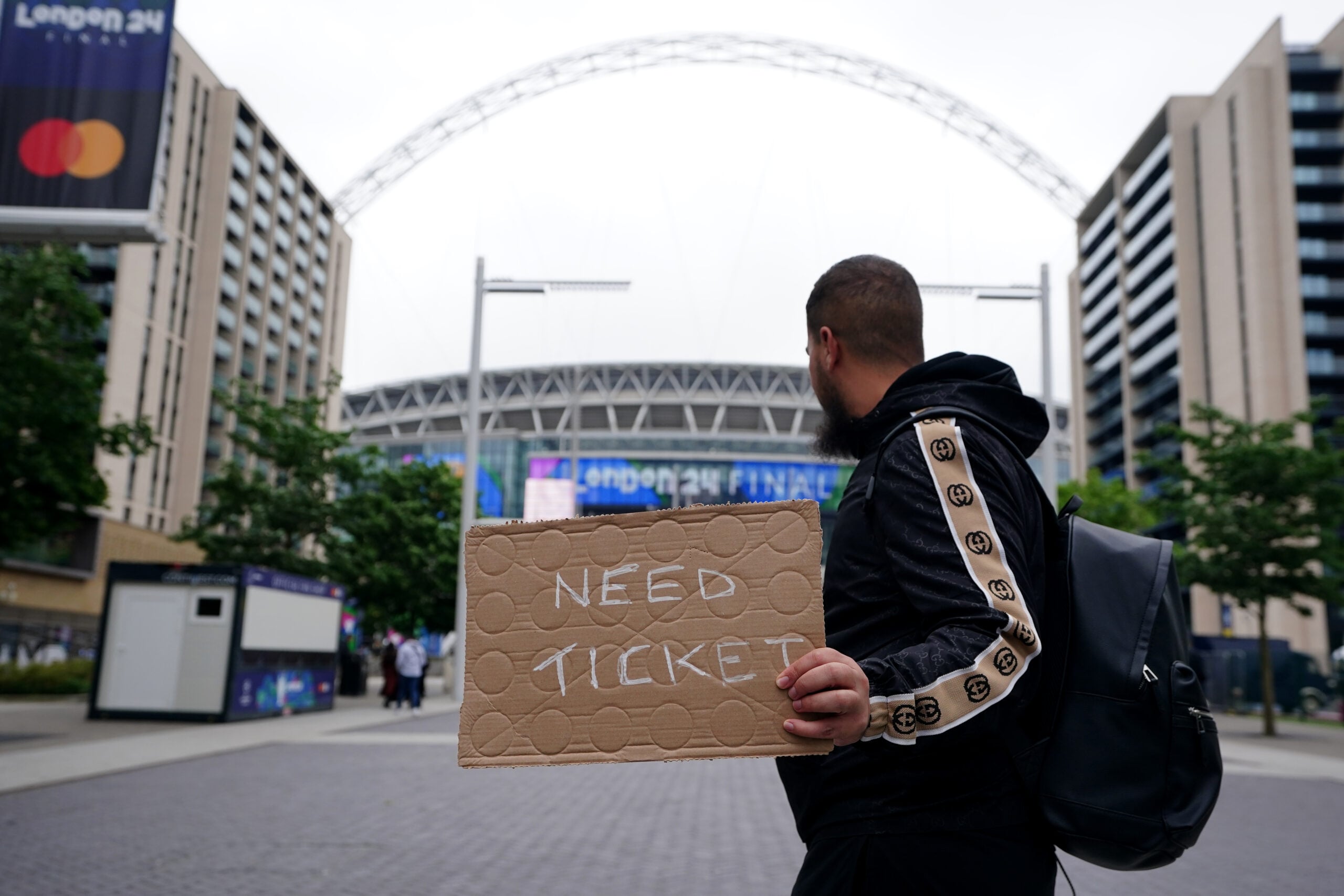
The UK’s culture minister Ian Murray has penned an op-ed for the UK’S Daily Record, which states that the UK’s current Labour government will make good on its election promise to cap prices on ticket resale.
The UK government conducted a consultation on ticket resale between January and April this year, gathering feedback from the public as well as the industry, on how to tackle the issue of some tickets getting resold for extortionate prices on the secondary market.
According to Murray, one of the questions asked in the consultation was, whether the UK should follow countries like Ireland, where ticket resale prices are capped by law. He writes that the response from fans taking part in the consultation was a resounding ‘yes’.
The argument from price cap supporters is simple: fans are often overpaying when purchasing tickets on secondary sites that allow resellers to mark up the original price. A price cap would limit such mark-ups, therefore fans won’t overpay.
However, current research suggests price caps won’t have the desired effect, but rather push touts and fans onto unregulated platforms like social media and various popular internet forums.
This research was highlighted to the UK government by “a group of experts in consumer protection, anti-fraud measures, and financial services,” in an open letter last month.
The reason financial institutions are relevant to the ticketing conversation is the fact that, in the UK, banks are liable to reimburse victims of so-called Authorized Push Payment (APP) fraud – a bank transfer intentionally authorized, but made to a fraudster rather than the intended recipient. Ticket fraud is “the single largest category within APP fraud today,” as the banks attest to.
Aside from representatives of the financial sector like NatWest, Wise or Monzo, the open letter was also signed by independent criminologist Dr Nicola Harding, who published the letter on her LinkedIn page; Sarah Kingston, professor in the School of Law and Policing at the University of Lancashire; Tony Neate, CEO Get Safe Online, and many more.
The letter lays out how a price cap may be “aimed at improving fairness in ticketing,” but “would likely drive more transactions into unregulated online spaces such as social media platforms, already the primary breeding ground for ticket fraud, the single largest category within APP fraud today. In early 2025, 50% of all APP fraud claims handled by Santander UK were linked to ticket scams, while Revolut reports that 54% of scams on its platform originated from Meta-owned properties – with ticket fraud the fastest-growing category.”
The letter then cites research by Bradshaw Advisory, which can be accessed here. UPDATE: Nov. 13, 2025: The research by Bradshaw was commissioned by StubHub.
Bradshaw Advisory concludes, “the problem is not just the high likelihood of the proposed regulation being ineffective in keeping second-hand ticket prices to an acceptable level. In pushing more sellers (and therefore buyers) into unregulated markets, the vulnerability of UK consumers to ticket fraud will likely increase.”
The advisory firm highlights data from two countries, where price caps are in place: Victoria, Australia, where the Major Events Act of 2009 made it illegal to sell or advertize resale tickets for more than 10% above face value, and Ireland, where the Sale of Tickets Act in 2021 prohibited the resale of tickets for a price exceeding their original sales price.
Comparing ticket fraud rates across the UK with those from these two regulated markets, Bradshaw Advisory tested “the hypothesis of whether the introduction of price caps to secondary ticket markets does increase the exposure of consumers to the risk of ticket fraud and by extension, whether the legislation proposed by the UK government will deliver the gains for consumers it promises.”
The findings show that “ticketing fraud rates are almost four times higher in Victoria and Ireland than the UK, with this result holding across essentially all ticket types, from sport events to concerts to exhibitions. While it is not possible to use data to establish a direct causal relationship between the introduction of the regulations and fraud rates, the remarkably robust results here should be seriously concerning to those proposing a price cap.”
The report continues to highlight that it wouldn’t just be fans losing out, but the government as well, as only regulated resale platforms pay sales tax on resold tickets.
Finally, there are impacts on the events industry itself, as experiences of ticketing fraud could deter individuals from buying tickets in the future.
The group behind the open letter to the UK government therefore calls “for the exploration of safer, smarter alternatives, such as ‘open ticketing’ requirements or enhanced digital verification, that could be capable of achieving the same goals of, in this case, reducing the harm of ticket touting – without driving fraud.”
Open ticketing can already be observed when purchasing tickets in industries other than events. When buying a plane ticket, for instance, it does not matter if the ticket has been purchased on the airline’s website or on one of the countless third-party booking sites out there. It will still get ticket buyers through the gate at the airport.
Open ticketing is the behind-the-scenes technology that lets these two systems – the airline’s and the third party’s – “talk to each other,” so tickets are always fully verified.
The same could work for events, if the entire business was willing to gather around the table and come to an agreement.
With open ticketing, the primary platform and the resale platform are connected. When a ticket is sold or transferred, the platforms update each other. In theory, they always know who owns the ticket, whether it’s been resold or transferred, and if it’s still valid.
In more technical terms, both the primary and secondary sellers would be utilizing an interoperable API (Application Programming Interface), which, according to open ticketing proponents, could enable the biz to detect fraud and identify scams early.
Open ticketing could facilitate the sharing of information needed to identify illegal bot activity, verify ticket information, and stamp out speculative ticket selling. Other potential benefits of an open ticketing environment would be increased competition, and therefore greater innovation, as well as the ability of a seller, who has legitimately acquired a ticket, to transfer it freely on whatever channel they see fit to use.
And open ticketing is already happening to an extent, whenever there are multiple ticketing agencies involved in one tour. Tickets for the Oasis tour, for instance, were available on three primary ticketing platforms, with one company chosen as the designated resale platform.
In such cases, all companies involved work with one ticketing manifest, which is the API in this case. Each digital ticket possesses a unique ID number. Artist, venue, date, section, row and seat number are the visible representations of what that unique ID number represents.
This number allows any external system with access to the manifest to pull the relevant information, locate the ticket, and sell it. When Ticketmaster, for instance, sells tickets for a gig at a venue working with AXS or any other ticketing partner, all ticketing agencies involved will access the same manifest in that way.
It shows that competing businesses can work together. Viagogo of all ticketing agencies has been on the record saying it wants to get the industry around a table to talk about a better way to do ticketing.
Viagogo global MD Cris Miller told Pollstar in a 2024 interview, “how can we all work together to try to support the event and sell it out? How do you get to a place where all these ticketing companies that are reputable, that have good marketing, good products, can work together. Like the travel industry, which is a really good analogy.
“Why not have a model that moves your tickets into more platforms at once, and helps you sell these events. There are so many ways in which we can improve the experience. If we could get around a table and discuss this, there are opportunities that can help both the industry as well as the fan.”
If there’s a real chance the positive outcomes of a more open ticketing landscape could improve the ticketing experience for everyone, but especially the fans – who are at the heart of the government’s ticketing consultation, as well as of so many artists wanting them to access their shows for a fair price – it could be worth considering an alternative approach to price caps.
This article was updated Nov. 13 to reflect that the research by Bradshaw Advisory was commissioned by StubHub.
FREE
 Daily Pulse
Subscribe
Daily Pulse
Subscribe
 Daily Pulse
Subscribe
Daily Pulse
Subscribe