
Big Games By The Bay: Super Bowl & World Cup Come To Levi’s Stadium
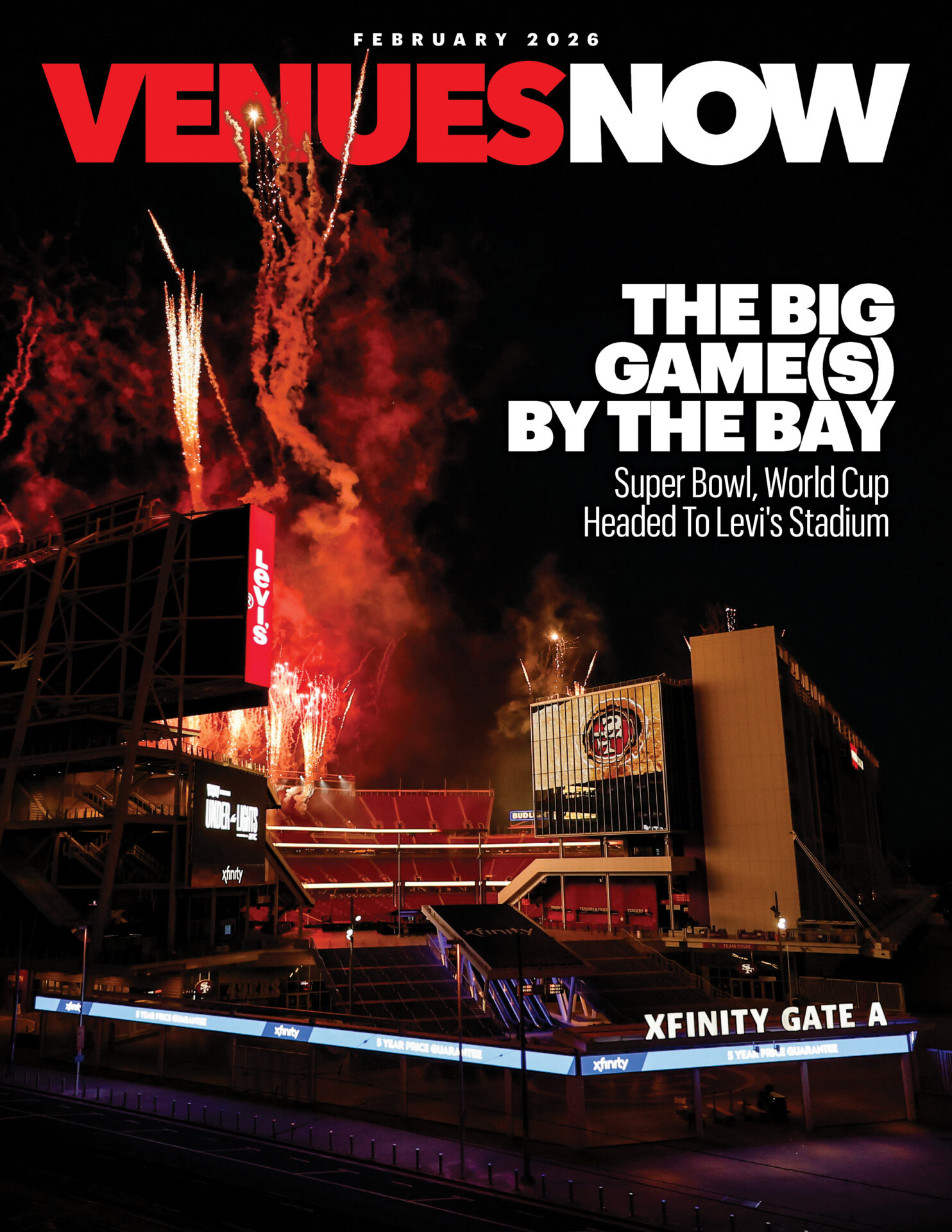
With a full regular season under its belt after completing a two-year $200 million renovation, Levi’s Stadium is fully ready to serve as host for the Big Game, Feb. 8.
(This article is part of the February Issue of Pollstar, which published in January. Click here to purchase a copy.)
“I feel like I’ve spent the last 30 days talking about contingency plans, so we’re preparing,” says Francine Melendez Hughes, general manager of Levi’s Stadium since 2023.
“It’s crunch time for us, right?” Melendez Hughes says. “There’s a lot of work happening here in and around the stadium to include road closures that we’re working through with the city, but also building out the activation footprint for Super Bowl 60, all the activities that happen on the outside of the stadium. We’re also taking a lot of our learnings from Super Bowl 50 and have a good amount of staff that actually were here then, bringing their experience to this to ensure that we hit it out of the park here.”
Levi’s Stadium also hosted the Super Bowl in 2016.
Coordination is the name of the game when working with the NFL and Super Bowl specifically, as the league prepares years in advance and in some ways takes over operations for the actual game itself, working closely with Levi’s Stadium and the 49ers along the way. Melendez Hughes says this NFL season – and successful concert events, including multiple nights of The Weeknd, Morgan Wallen and Metallica – have played out as hoped and expected.
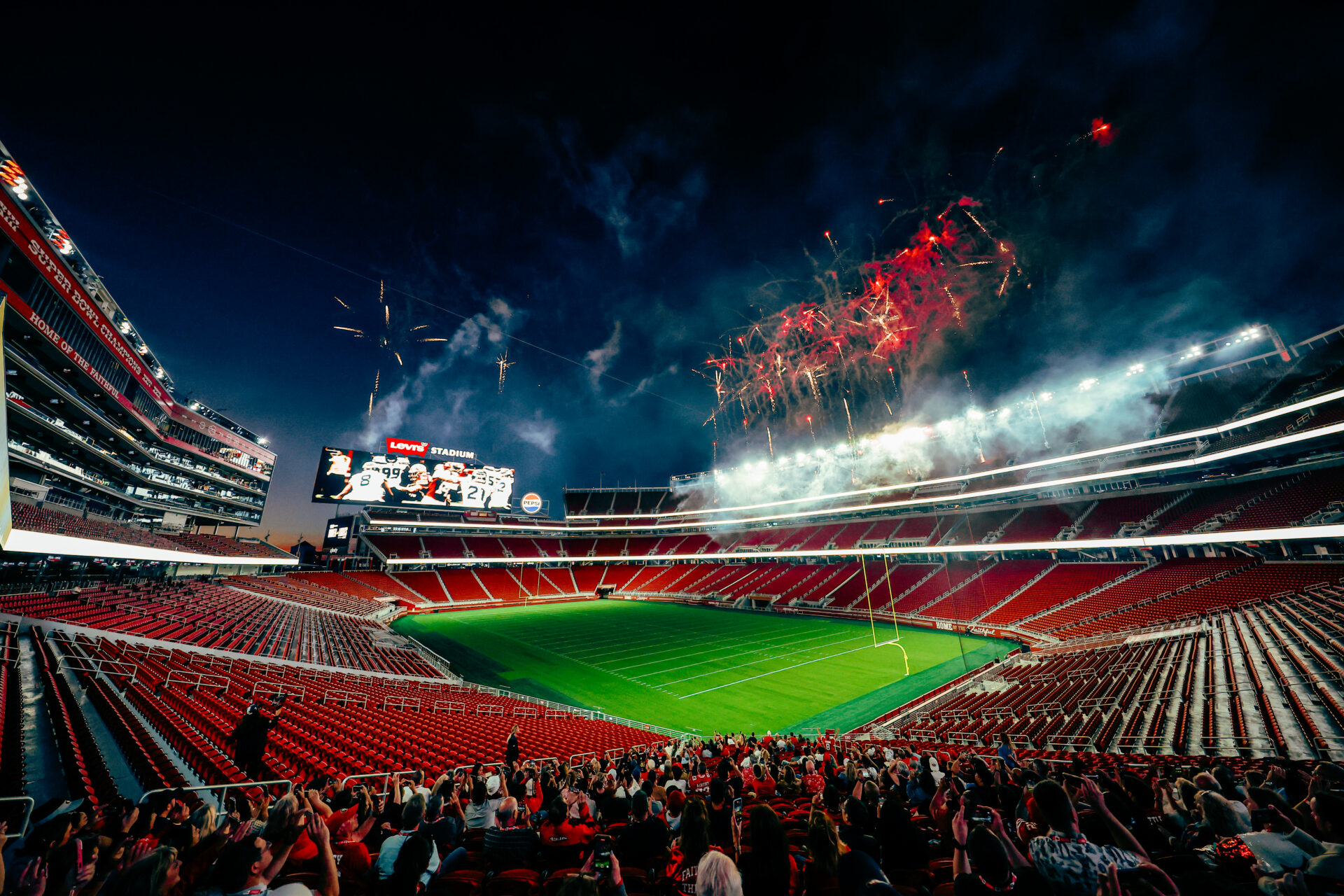
“Looking back at when we started this, it was a very short window for us to get our renovations completed,” she says. “We started in the latter part of January and completed everything before June 14th. When you think about the timeline in which we had to get not only our 4K video boards completed, which are like the largest in all of the league, it was quite a feat. But we had incredible partners helping to spearhead the project and ensure that we had the proper equipment in place and functioning as it should. It was a great experience.”
The upgrades include two new 4K videoboards, the largest such outdoor screens among NFL stadiums, a whole new gameday production control room, 55,00 square feet of new LED across the stadium, new LED field lights, improved Wi-Fi network with Comcast and Cisco, DAS cellular network, 120 renovated suites and a remodeled 49ers Team Store.
“Our team is excited, and when you’re in an events or operations role, you live for these types of events,” says Melendez Hughes, who joined the team in 2023 after working in operations with the Los Angeles Dodgers. “We’re really proud of what we’ve been able to do, not just last season, but what we’re looking to do in the upcoming season as well.”
The Super Bowl brings a rare opportunity to be part of one of the biggest media moments of the year, a chance to showcase a whole geographic region, and, of course, to plan additional related events. It helps when city and league leadership seem extra eager for community engagement and leaning on local event organizers.
“This is a different level than it was in 2016,” says Allen Scott of Bay Area-based Another Planet Entertainment, which is producing official Bay Area Host Committee (BAHC Live!) concerts at the Bill Graham Civic Auditorium, featuring Benson Boone (Feb. 5), Martin Garrix (Feb. 6) and Chris Stapleton (Feb. 7). Another Planet is the exclusive booker for the 8,500-capacity San Francisco venue.
“We did the NFL Honors at the Bill Graham Civic in 2016, but there’s just definitely a different level of participation happening, and it feels like the whole town is being taken over with really great events,” Scott says.
Scott notes that the BAHC Live! concerts are a hybrid public-private, with sponsors and ticket packages taking up about half of the tickets for the concerts, and the other half available for purchase by the public. There’s also a charitable element benefiting local anti-poverty nonprofit Tipping Point, which counts Another Planet CEO Gregg Perloff as a board member.
With multiple entities involved in Super Bowl adjacent events, Scott says the results add up as a positive.
“There are a lot of different cooks in the kitchen and different agendas, but they are all ultimately paddling in the same direction to bring world-class entertainment to San Francisco during the Super Bowl,” Scott says. “It’s been a fluid experience working with the Bay Area Host Committee, working with the 49ers and with Tipping Point. We’re excited at how it all came together.”
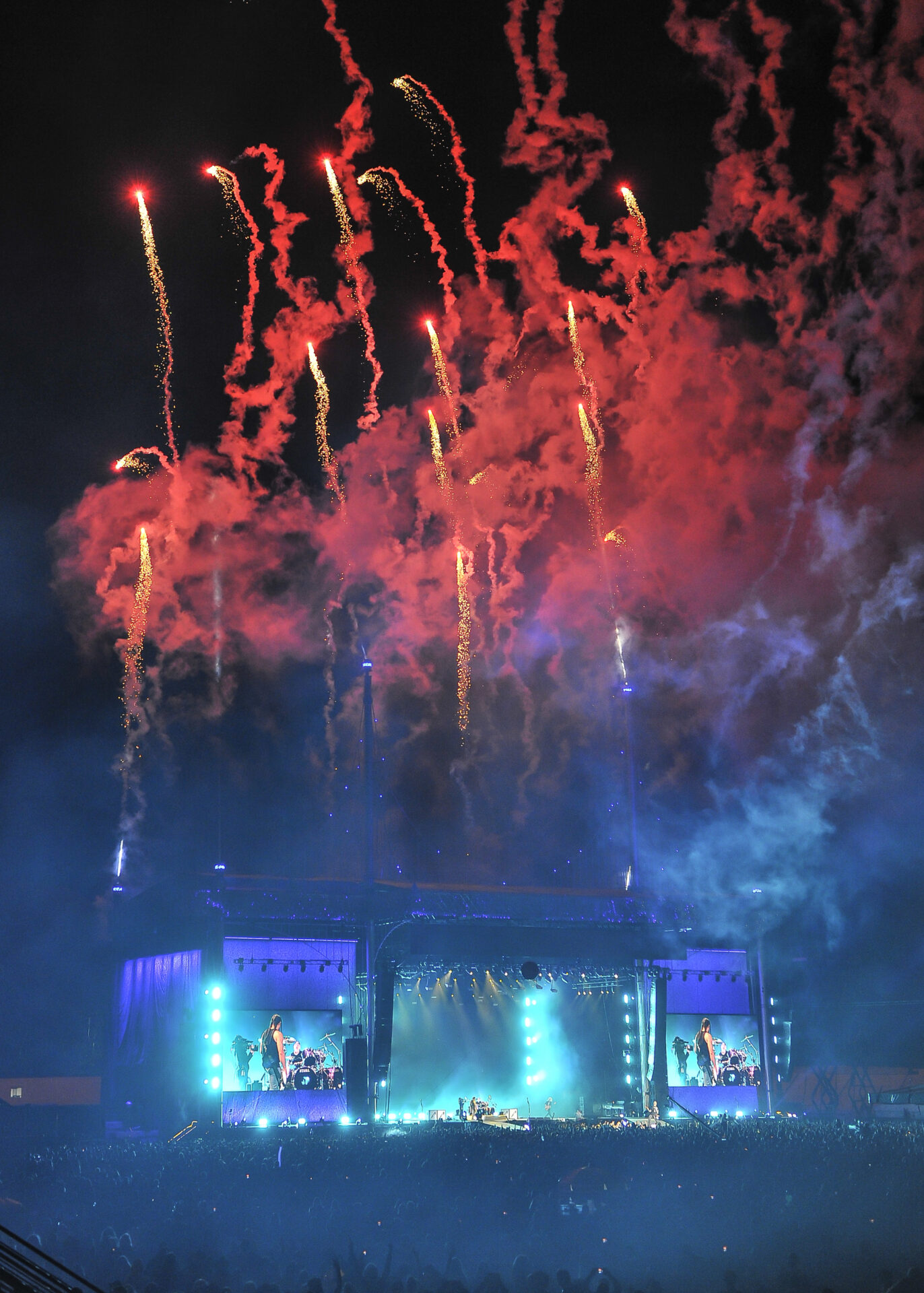
The promoter, of course, has a large footprint in the Bay Area and northern California, with its long-running Outside Lands festival at Golden Gate Park becoming an annual staple and leading to more Golden Gate Park bashes, including with artists such as Zach Bryan and Dead & Co.
The company is also instrumental in the $41 million restoration and reopening of the historic Castro Theatre in San Francisco, which will reopen with a 20-show residency by superstar Sam Smith running from Feb. 10 to March 14. That adds to the company’s similar presence across the Bay in Oakland with the historic Fox Theater, which reopened with a major renovation in 2009.
“San Francisco right now is very open to doing things out of the box, which hasn’t always been the case,” Scott says, noting a new Mayor in Daniel Lurie. “Everyone understands the importance of arts and culture and what that does for a city, and seeing it manifested here with the Bay Area Host committee and with everything that’s going on around San Francisco that weekend is really exciting.”
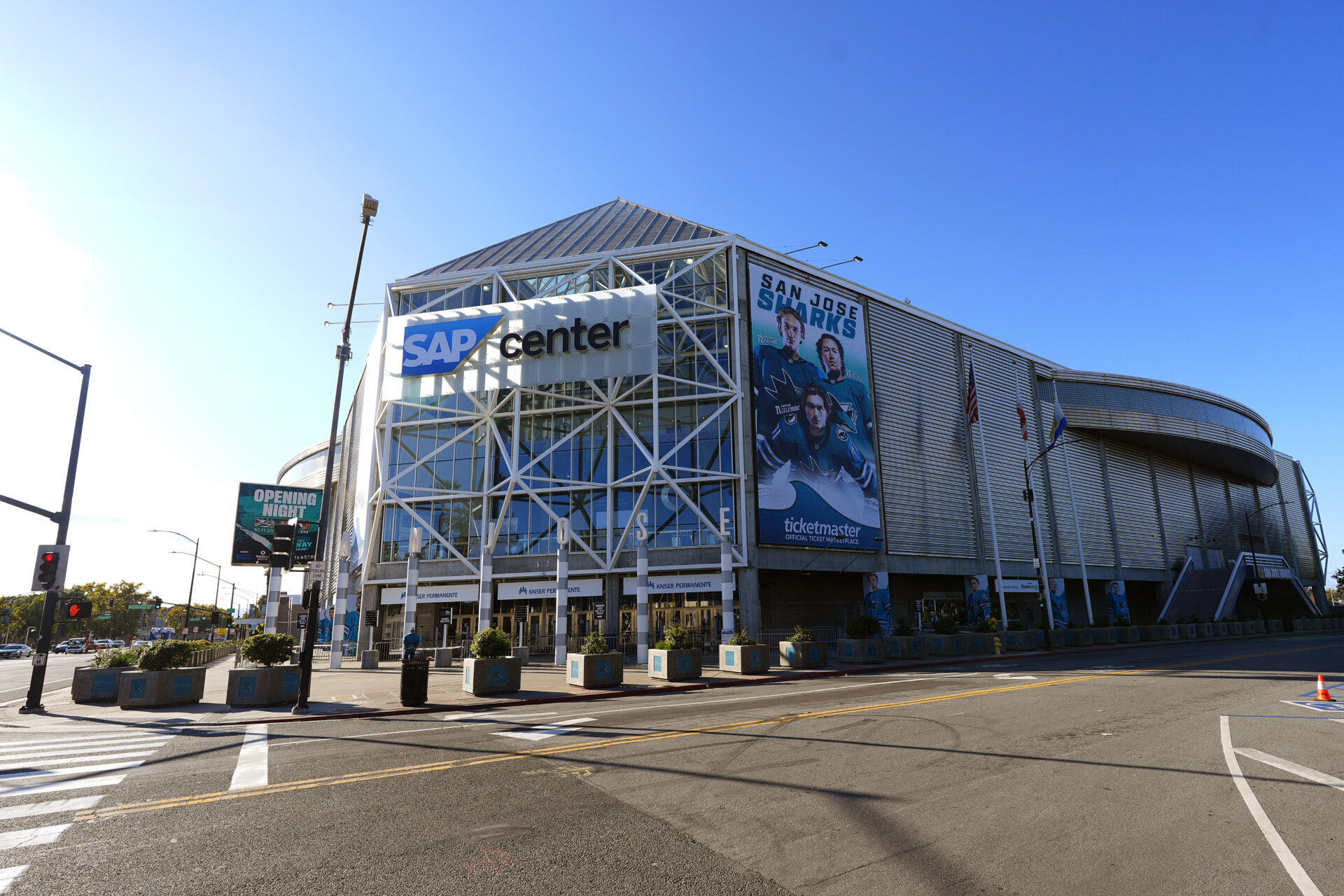
Part of the Host Committee and representing the South Bay nexus of San Jose is Sharks President Jonathan Becher, who recently landed a deal with the city, keeping the NHL team in San Jose and committing $500 million worth of arena improvements through the 2051 season. He sees the Big Game taking place in the South Bay as an opportunity to stand out among the wider Bay Area and as its own sports and entertainment destination.
“We have a really big first half of the year between the Super Bowl, March Madness and then FIFA World Cup in June and July,” Becher says. “As part of the relationship that we have with the city of San Jose, we jointly host something called SJ26, which is all things happening in San Jose, from drone shows to watch parties to the FIFA teams actually staying in San Jose at hotels. So it will be a party atmosphere here. I think all the hotels are already sold out.”
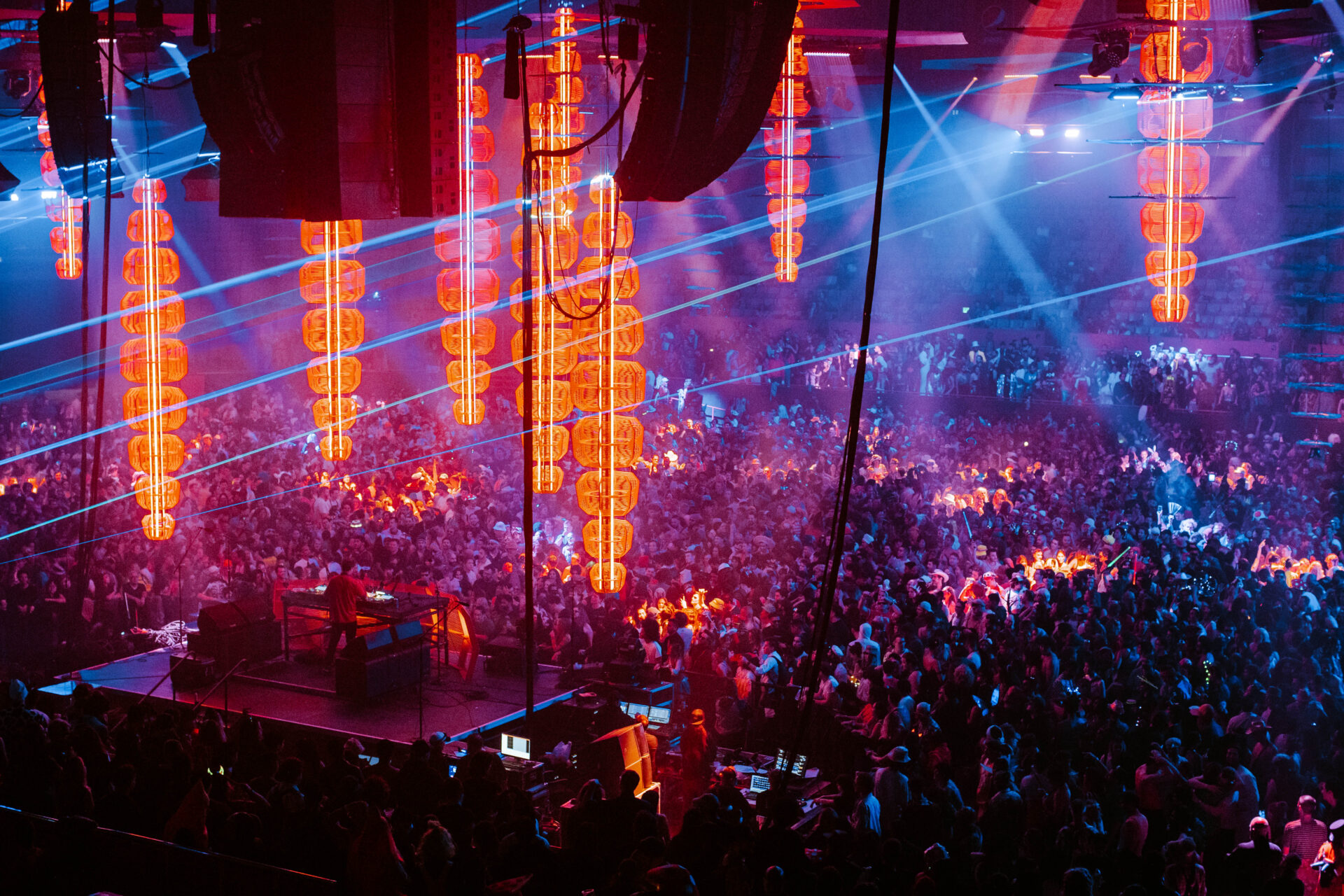
Also getting in on the action are newer players looking to bring different experiences to fans, such as Non Plus Ultra, which has developed the Pier 80 cargo terminal into a large-scale warehouse concert venue with close to 20,000 capacity. For New Year’s Eve, the space hosted 100,000 fans to see headliners including Swedish House Mafia, Skrillex / Four Tet and John Summit. Ahead of the Super Bowl, Pier 80 will host top electronic talent, including Illenium Calvin Harris, Sonny Fodera and Diplo, as well as T-Pain and Sean Paul.
Navigating maritime operations at the pier, which ships thousands of cars per day, leadership at Non Plus Ultra are aiming for quality over quantity of events, strategically making a splash and bringing a different look to the Bay Area scene and electronic artists specifically. The space debuted as home to the Goldenvoice-produced Portola festival, quickly becoming a hit for its unique scene and authentic curation.
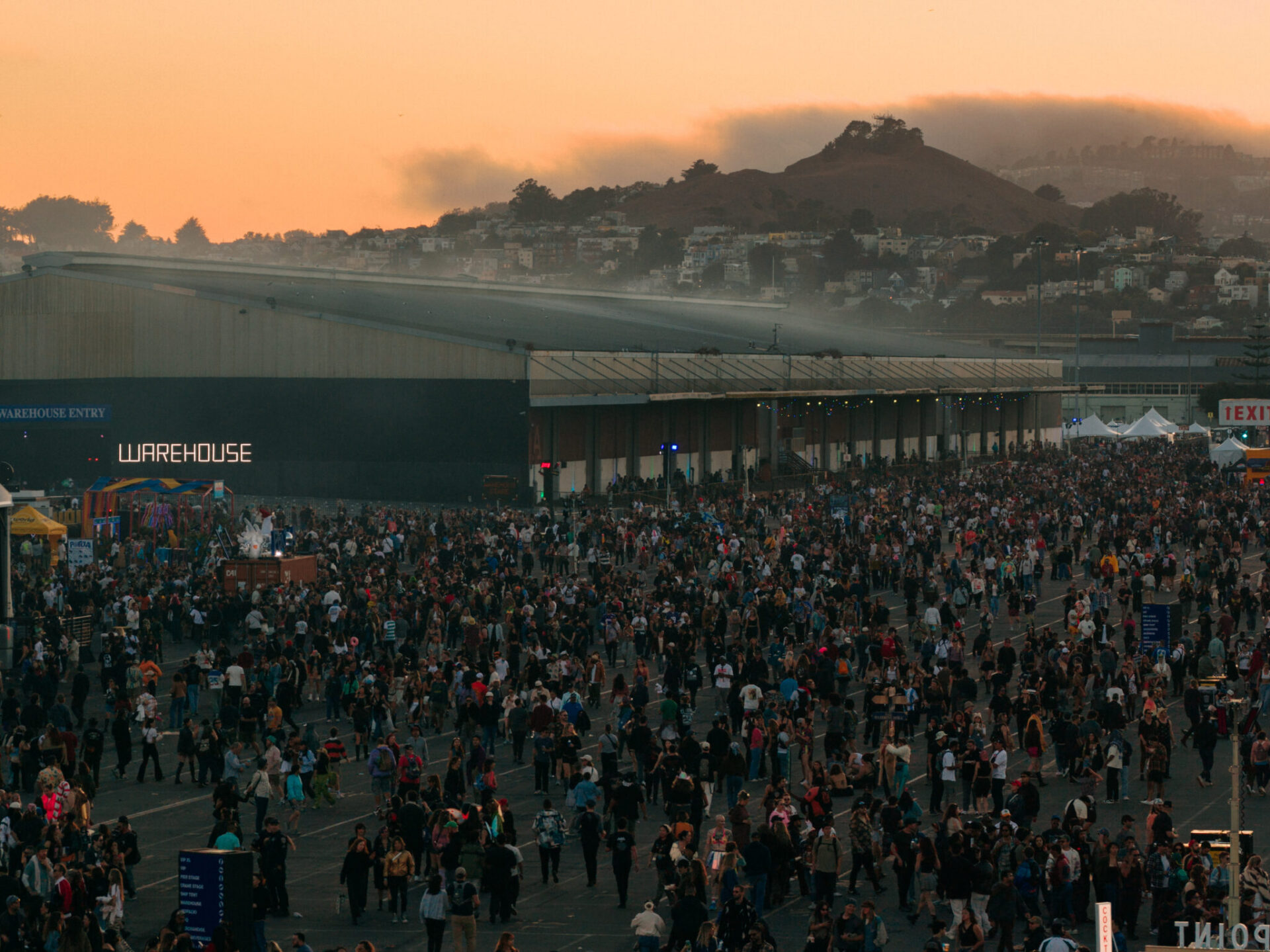
“We’re in a bit of an electronic music resurgence, and San Francisco is at the epicenter of it,” says Non Plus Ultra CEO Jordan Langer. “We have a new mayor in San Francisco and some awesome players that are taking entertainment and culture very seriously. The entertainment and cool and culture and awesome that people used to move to San Francisco for has a little bit been forgotten over the years, and we are bringing it back in a super meaningful way.” Langer adds that despite warehouse venue and rave vibes, the focus is on production value for artists and fan experience, with high-quality food and beverage and customer service in mind rather than the underground after-hours raves of old.
“A lot of electronic music started in warehouses, so we have a really cool advantage where there’s this demand not only for fans, but also artists,” Langer says. “It has that personal underground feel to it, and it’s essentially a blank canvas of what to do production-wise. These top-tier acts all have their own unique creative vision for what they want to do, and we’re able to make that happen in Pier 80.”
The San Francisco Giants even recently got in on the maritime storage venue space, with “The Heart of Town” at Pier 48 hosting a July 31 concert with Grahame Lesh & Friends, Stephen Stills and many others, while a revamped Cow Palace in Daly City also offers a large-scale flat floor suited for electronic music.
“Wasserman Music and their electronic artists specifically really enjoy playing here because people feel close,” says Eric Blockie, general manager of the Cow Palace. The venue’s 3,000 parking spaces not only add to convenience but provide a revenue stream to share with the artist side, Blockie says.
“Every dollar we make, we put right back into the building, meaning updated dressing rooms and rigging and all that stuff to make the world go around,” he said. “Between the production, our staff and the backstage and catering and all the rebates that we give — we have a very competitive rent here at less than $10,000 to rent the building plus expenses, which is phenomenally cheap.”
THERE’S NOTHING LIKE IT
With a storied history touching on the heyday of rock ‘n’ roll, specifically the Summer of Love and psychedelic movement of the late 1960s bringing into the mainstream live music staples like The Grateful Dead and Santana, to, across the Bay political movements like the Black Panthers, and later home to artists from Metallica to E-40 and Too $hort, the Bay Area is often a barometer of musical counter-culture, rebellion and, with the proliferation of Silicon Valley and home to tech giants since the early days of Apple and Microsoft, progress.
The addition of Levi’s Stadium in 2014 meant the San Francisco waterfront losing a venue, with the implosion of the old dual-purpose Candlestick Park that had been home to both the Giants and 49ers, but the Bay would soon gain another crown jewel with the opening of Chase Center in 2019, home of the Golden State Warriors who had played across the Bay in Oakland since the 1970s.
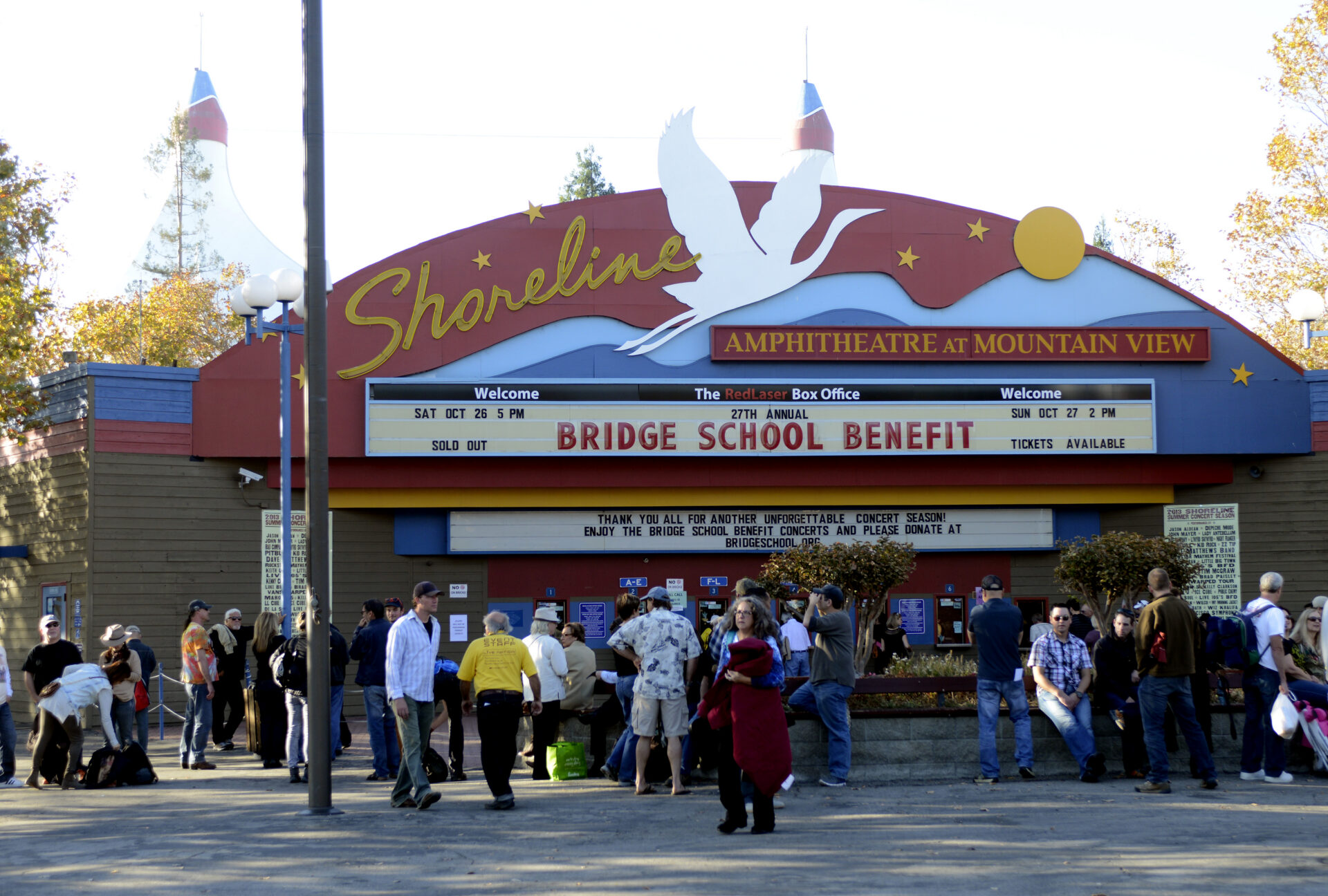
Navigating the ebb and flow of the changing venue landscape and overall entertainment scene is Jodi Goodman, president of Live Nation Northern California, who has held a similar role in the region for the last 20 years. Some of Live Nation’s primary venue operations in the venue include Shoreline Amphitheater, the storied Fillmore concert hall and, now, three major arenas.
“Each building has really been able to create their own identity and personality,” says Goodman. “When artists elect to play there, there’s a connection, there’s a reason. It could be a very specific community and particular market. San Jose gets a certain draw for certain talent and there’s so many cycles that you’ll see an artist come back around or play two different play both San Jose and Oakland in the same round. We sort of have a bit of an embarrassment of riches here in having these three arenas.”
On the stadium side, Goodman says 2025 was particularly difficult schedule-wise, finding the right venue on the right night and fitting in with global touring plans for multiple major artists. But 2025 was a blockbuster, with artists, venue and promoter all eager to make the shows happen.
“Last year we had 14 stadiums, and that’s a lot for the Bay Area,” says Goodman. “You really had to catch your window. And sometimes you are left in a position where you maybe don’t have your optimum choice of being in a football stadium, but can still figure out a way to make it work in baseball. It certainly is a big lift, but there’s no not playing San Francisco, let’s put it that way.” Echoing the San Francisco Giants’ slogan of “There’s Nothing Like It!” Goodman calls the Giants’ Oracle Park “a special place,” and good demonstration of the city’s charm.
“San Francisco is a tight footprint, and that’s part of what makes it so charming,” says Goodman, who lives in Marin County but works out of the city’s San Francisco office. “Artists who come through that marketplace are so in awe of the beauty and just the intimacy of it.” They are also struck by the history of venues like Shoreline Amphitheater, developed by Bill Graham and considered one of the first modern amphitheater venues for touring artists, and the Fillmore, booked by Graham on Geary Street since 1965 and chock full of rock ‘n’ roll history.
“There’s something just very magical in that room,” she says. “First of all, it feels like a museum. I’ve heard artists talk about this, they know who’s been on that stage before them, they’re feeling when Prince was there, they’re feeling when The Dead were there. They’re feeling all that.”
Goodman calls a trend in stadium tours as opposed to amphitheater runs or festival plays cyclical, like much else in the concert industry.
“I think now we’re seeing maybe it’s moving more into a trend of less festivals and artists doing their own curated shows, which is what puts them in the stadium business,” she says, noting large-scale productions for artists like The Weeknd and Shakira. “The one thing that we can do is make sure we’re improving the experience and that it’s always meeting the moment, because it’ll swing back. Our arena season in ‘24 was unbelievable, but that can cannibalize what they might have wanted to do outside.”
FREE
 Daily Pulse
Subscribe
Daily Pulse
Subscribe
 Daily Pulse
Subscribe
Daily Pulse
Subscribe