
The Rebirth Of Cool: Celebrating 100 Years Of Miles Davis
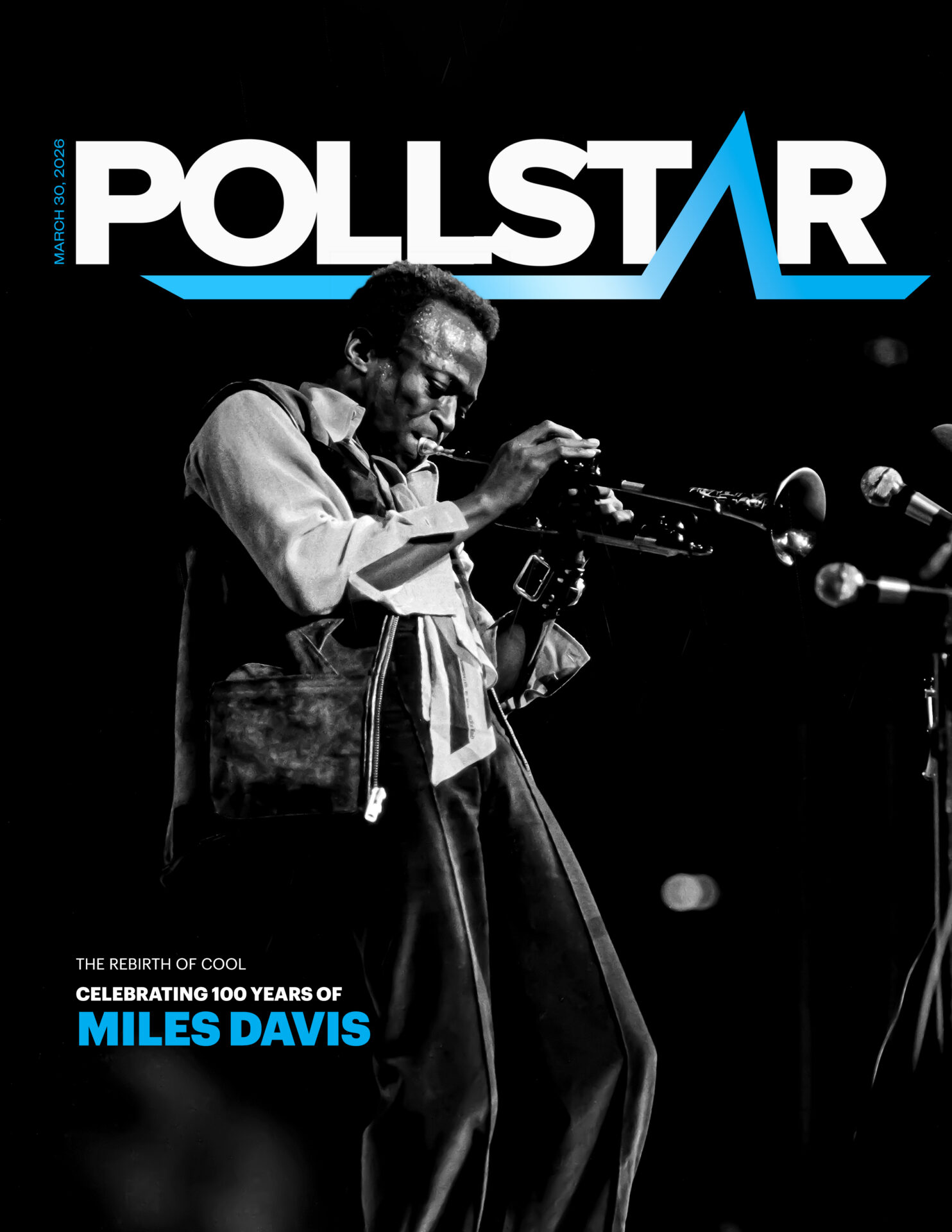
Icon, legend, genius, pioneer, visionary, trailblazer, innovator, jazz demigod — Miles Davis, musically, was all these things and more. With incalculable contributions to jazz writ large, through virtuoso musicianship, performance, composition, collaboration and leading an extraordinary range of ensembles and a vast recorded legacy the depth of his impact runs infinitely deep. The scope of the music he created with his trumpet and performed over the course of his lifetime (May 26, 1926–Sept. 28, 1991) embodies relentless innovation, fearless reinvention and mind-expanding musicianship guiding listeners through much of the history of jazz—bebop, hard bop, the birth of cool, fusions of jazz-funk and jazz-rock, progressive electric experimentation, avant-garde and more. Today, Miles Davis; legacy continues to be a multi-generational launchpad, especially this year, which marks the centennial celebration of this music titan who did nothing less than redefine culture.
“We knew we were coming up on this culmination of 100 years,” says Erin Davis, a musician and Miles Davis’ son, “but it wasn’t going to end, We weren’t going to stop doing all things Miles. This is more of a jumping off point. We’ve had the first 100 years and now we are going on to the next century. We thought, let’s make sure we really blow out this 100th year, but let’s make sure that we are lined up so we can keep going forward.”
Expansive, Ferocious & Daring: The Best Of Miles Davis Live
A “blow out” is an apt description of the 16-month celebration of the master musician who didn’t just cross genres, he reinvented them with a combination of technical brilliance, astonishing range and insatiable creative energy. Much like his celebration, Davis wasn’t motivated by what he had already accomplished. He was driven by what he could do next. Which over the next year will include live performances, festivals, tribute songs, deluxe recordings, films, books, fashion lines, art, car commercials and more.
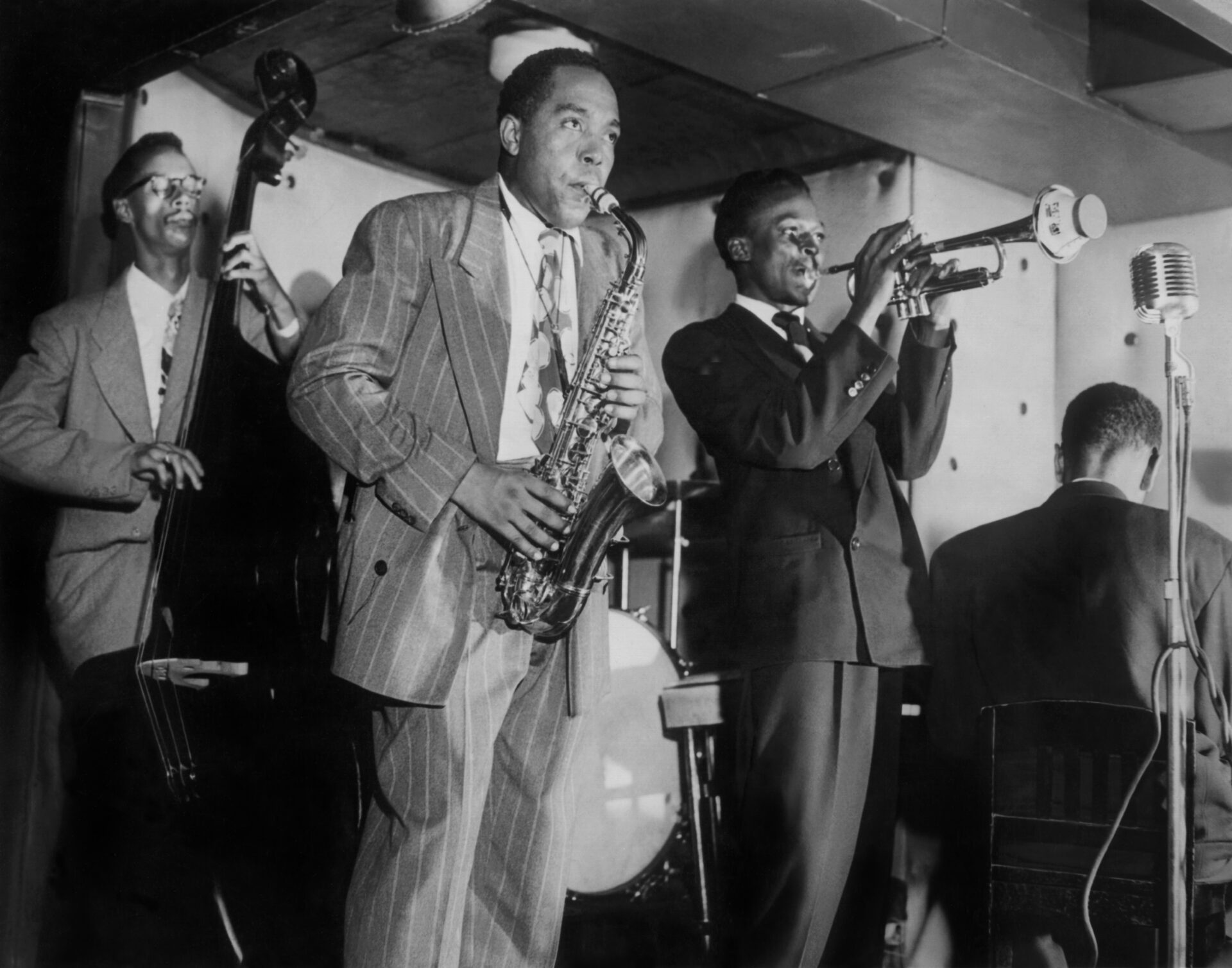
Born Miles Dewey Davis III on May 26, 1926, in Alton, Illinois and raised in East St. Louis, Davis would enroll in NYC’s prestigious Julliard, before promptly dropping out to play with the great Charlie Parker’s Quintet. Recordings Davis would make in 1949–1950 would appear on his landmark 1957 album Birth of the Cool that helped move jazz beyond bebop’s intensity toward a more measured, sound that became known as cool jazz, with charts by Gil Evans. With some 60 studio albums, 39 live albums, 46 compilation albums, 27 box sets and four soundtracks, Davis discography is a massive treasure trove. Some of his most beloved recordings include 1957’s Miles Ahead, 1958’s Milestones, 1959’s Kind of Blue and Porgy & Bess, 1960’s Sketches of Spain, 1965’s. E.S.P., 1969’s In a Silent Way , 1970’s Bitches Brew and Jack Johnson; 1972’s On The Corner and 1986’s Tutu among others.
The surfeit of iconic musicians Davis collaborated with is astonishing: The Birth of the Cool Nonet (1949–1950) with Gerry Mulligan, Lee Konitz, and Max Roach; First Great Quintet (1955–1958): John Coltrane (tenor sax), Red Garland (piano), Paul Chambers (bass), and Philly Joe Jones (drums). Later added Cannonball Adderley on sax. Kind of Blue Sextet (1959): John Coltrane, Cannonball Adderley, Bill Evans/Wynton Kelly (piano), Paul Chambers, and Jimmy Cobb (drums). Second Great Quintet (1964–1968): Wayne Shorter (tenor sax), Herbie Hancock (piano), Ron Carter (bass), and Tony Williams (drums). Known for post-bop and experimental, modal jazz. Fusion/Electric Period (Late 1960s–1970s): Included John McLaughlin (guitar), Chick Corea (keys), Joe Zawinul (keys), Dave Holland (bass), and Jack DeJohnette (drums), creating the groundbreaking Bitches Brew. 1980s Electric/Funk Group: Featuring Marcus Miller, Mike Stern, John Scofield, and Mino Cinelu, focusing on funk and pop-influenced rock.
Davis was musically omnivorous tastes and has cited influences from non-jazz artists like Jimi Hendrix, James Brown, and B.B. King. He played with a number of R&B/soul vocalists that included Chaka Kahn, Erykah Badu, Bilal and Leidisi as well as blues great John Lee Hooker and mega stars like Prince, Stevie Wonder and Sting. In April 1970, the Miles Davis Quintet famously opened for the Grateful Dead during a four-night run at the Fillmore West. His influence on contemporary is vast and includes a wide swath of hip-hop artists: The Notorious B.I.G., OutKast, J Dilla, Kendrick Lamar, Madlib and A Tribe Called Quest, who all sampled his work.
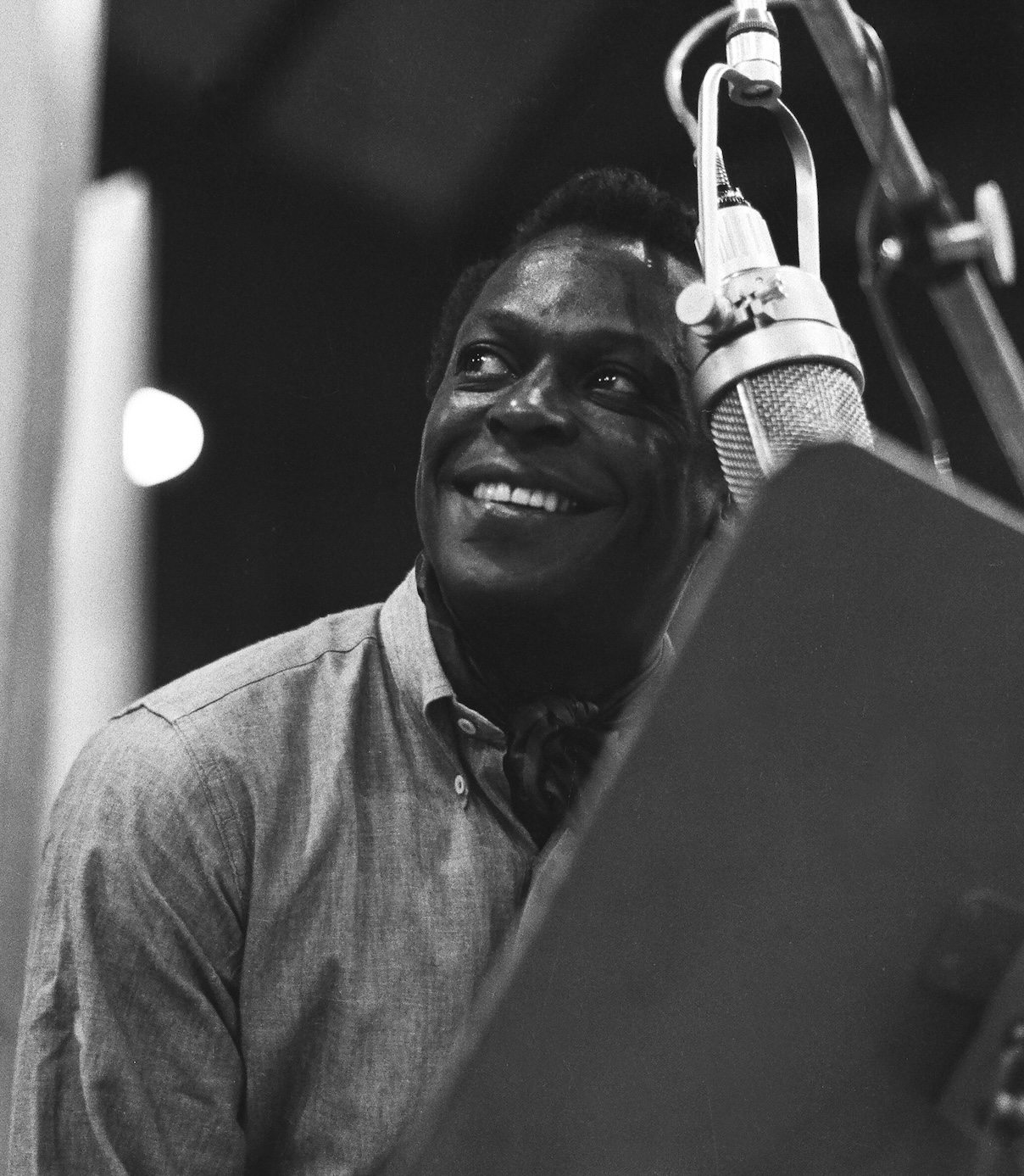
The various record labels that were stewards of Davis’ catalog are also part of the Centennial celebration. In January, Legacy Recordings, the catalog division of Sony Music Entertainment, released Miles Davis – The Complete Live at the Plugged Nickel 1965, returning the landmark recordings to vinyl and CD for the first time in three decades. In addition, Universal Music Group’s Blue Note Records, Warner Music Group’s Rhino, and Concord’s Craft Recordings will issue a number of releases throughout the year.
“There’s tons of music for people to explore,” says Davis. “And since Miles’ catalog is spread out over four or five labels it gives people a chance to hear from different eras.”
Just ahead of the Centennial last September, Reservoir acquired 90% of Davis’ publishing catalog and rights and royalties from his recoded music. While a figure was not released, the purchase was reportedly estimated at $40 million to $60 million. And a strategic purchase due to the sync/licensing potential for film, TV and luxury brands and the global attention around the Centennial.
“It was both an honor and a privilege for Reservoir to acquire the Miles Davis catalog at such a pivotal moment,” says Golnar Khosrowshahi, Founder and CEO of Reservoir. “Together with the Davis Estate, we approached the Centennial as a celebration of his extraordinary legacy and an opportunity to bring Miles into new musical and cultural spaces, ensuring he continues to influence artists and inspire audiences for the next 100 years.”
The caretaker and artistic hand behind the live part of the Davis legacy is his nephew Vince Wilburn, Jr., drummer, producer and founder/bandleader of M.E.B. (Miles Electric Band) and a Miles’ band member in the 1980s. Wilburn played on and co-produced legendary albums including the Grammy-winning AURA, Decoy and You’re Under Arrest. As a producer, he spearheaded the biopic “Miles Ahead” and the Emmy-winning documentary “Miles Davis: Birth of the Cool.”
“It was exciting being on the road and playing with Uncle Miles,” offers Wilburn. “Friends that I grew up with were in the band – Darryl Jones, Robert Irving III. We had a band in Chicago and being on the road meant being out with my friends and an icon. And what was amazing was the effect that Uncle Miles would have on audiences all around the world – in countries where they didn’t speak the language, but the music was universal.”
Touring since his late teens, Wilburn recalls watching Davis from behind the drum kit.
“The audiences were hypnotized,” Wilburn says. “He had a wireless mic so he could go across the stage. And you could feel the energy and the eyes following him wherever he was on stage.”
Today, the stellar M.E.B. ensemble is focused on anchoring major U.S. jazz festivals and cultural events including tastemaker Big Ears Festival March 29 in Knoxville, Tennessee; Jazz St. Louis on April 8; Santa Monica International Jazz Festival May 9; and the Atlanta Jazz Festival kickoff on May 22 before international dates in Winnipeg, Canada, and Budapest, Hungary this summer.
On Feb. 25, the band headlined “Miles Davis Night” at the Miami Beach Bandshell during Montreux Jazz Festival Miami. Davis performed at the Montreux Jazz Festival in Switzerland 10 times between 1973 and 1991. His final appearance was captured in the landmark recording Miles & Quincy: Live at Montreux. Davis died three months after the festival on Sept. 28, 1991.
“Uncle Miles loved going to Montreux and he loved Claude Nobs, they were tight. And Quincy Jones was a close friend of ours,” says Wilburn. “Quincy and Uncle Miles did the recording in Montreux and that was one of his last performances in 1991, so when were asked to be part of this, we were very honored.”
With M.E.B. performing alongside the stellar Kind of Blue Acoustic Band, the Miami Montreux tribute featured an array of special guests including Jojo, Lalah Hathaway, Maurice “Mobetta” Brown, Gonzalo Rubalcaba, Ibrahim Maalouf and Sammy Figueroa who played with Davis and recorded on The Man with the Horn), backed by a breathtaking collection of Miles Davis alumni – Jones, Irving (aka Baabe), Munyungo Jackson and Jean-Paul Bourelly – with an array of jazz mavericks including Jason Kibler (aka DJ Logic), Greg Spero, Rasaki Aladokun, Antoine Roney and Keyon Harrold.
“We don’t want to be perceived as a tribute band,” says Wilburn. “We are just trying to have the audience experience our love for Uncle Miles and the musicians before us. This amazing music is our interpretation and we invite people to come with an open mind.”
Preserving the legacy while embracing the future is funneled through a single lens.
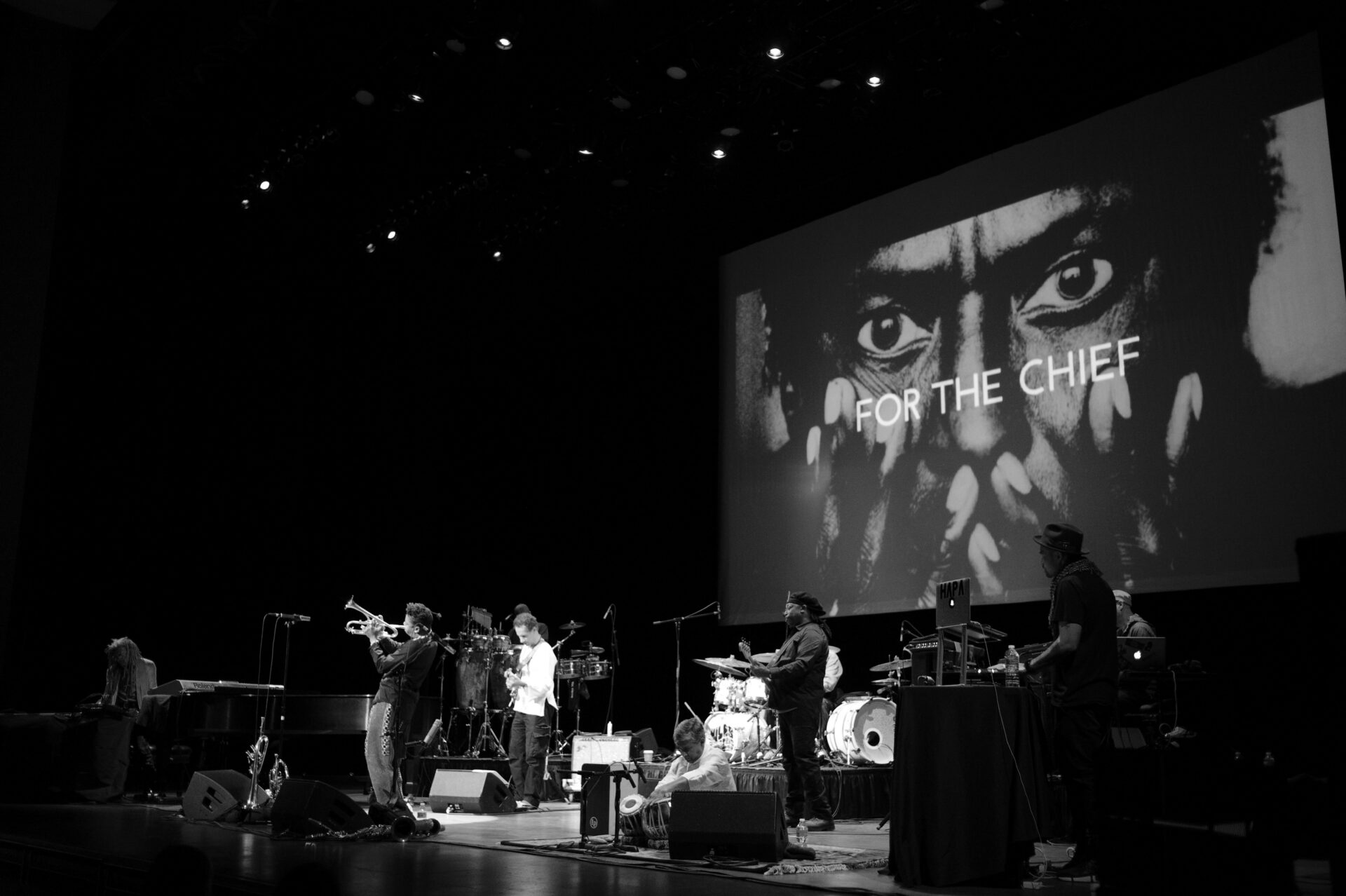
“We always say, ‘For the love of The Chief’ because that’s what we used to call Uncle Miles – affectionately The Chief,” confides Wilburn. “That’s in our heart, ‘For the love of The Chief.’” Through the efforts of M.E.B. and the Miles Davis Estate, an appreciation for The Chief is reaching new audiences and the next generation of trumpeters including Marquis Hill.
“When I reflect on the impact that Miles Davis has had on me, a wide range of thoughts and emotions surface,” says Hill. “But above all, one idea stands out – Miles embodies the archetype of pure originality. His originality wasn’t limited to sound – it extended to concept, composition, approach, bandleading and beyond. Through his work, Miles shows us that one of the most essential elements of this music is an unapologetic knowledge of self.”
Davis’ creative self-expression can be found throughout the Centennial, which runs through May 26, 2027. Managing the overall vision is The Miles Davis Estate, which is overseen by Davis’ daughter Cheryl Davis, her brother and Wilburn alongside General Manager Darryl Porter and Attorney Charles J. Biederman.
The calendar is full of Estate-sanctioned events and various pop-up tributes honoring Davis as a cultural icon. This includes Laufey, the sublime Gen-Z Icelandic Chinese jazz vocalist whose helping revive jazz for a younger generation is giving her take on “Blue in Green” a seminal jazz ballad from the masterpiece Kind of Blue
Beyond music, Davis – who was ranked No. 1 on GQ’s list of Most Stylish Musicians of All Time – was the inspiration for Milan fashion label Off White’s March 5 fall show during Paris Fashion Week, titled “Mr. Davis.”
The estate is executive producing a feature film titled Miles & Juliette, starring Damson Idris (F1) as Miles Davis and Anamaria Vartolomei (Mickey 17) as Juliette Gréco. Directed and co-produced by Bill Pohlad, alongside producers Mick Jagger and Victoria Pearman, the film chronicles Davis’ first trip to Paris and his romance in the ‘40s and ‘50s with the city and the French singer/actress.
Perryscope, the Estate’s official global merchandising and brand licensing partner, has struck a deal with men’s premium retailer John Varvatos for Davis-themed apparel items.
Other partnerships include a recently released Lexus commercial featuring Davis’ Kind of Blue vinyl cover and a co-branded Miles Davis Centennial cigar lighting up later this year from premium cigar and accessories company Ferio Tego.
“We’ve always felt his music lines up so well with luxury items, the luxury lifestyle, the Miles lifestyle, if you will,” says Davis.
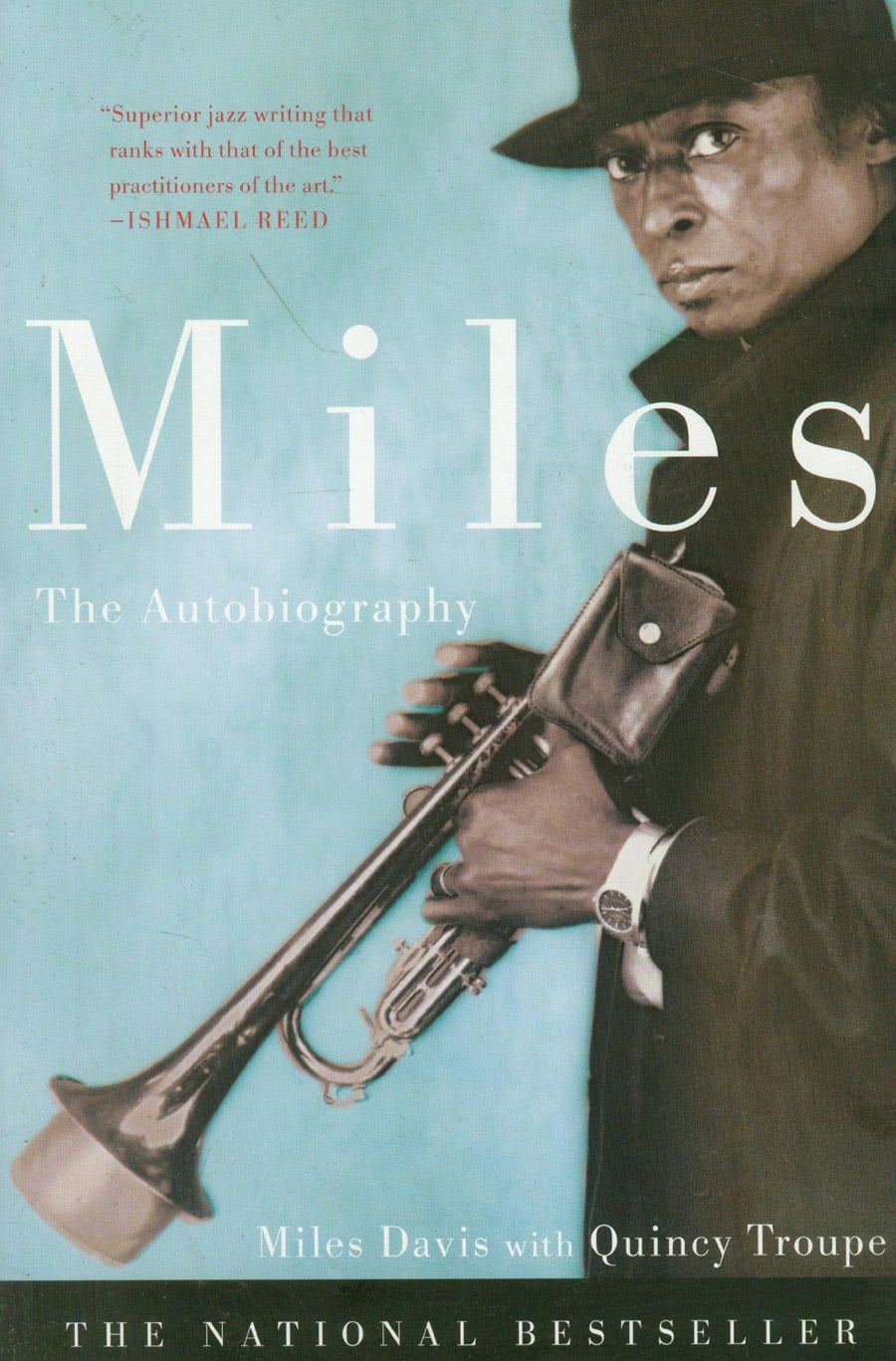
Simon & Schuster will publish a Centennial edition of Miles: The Autobiography. Originally published in 1989, the critically-acclaimed autobiography will be released with new cover and forwards to be revealed soon.
“Sometimes it’s a struggle to get it done,” says Davis of the effort behind curating the career-spanning Centennial. “But when it happens, it’s always beautiful.”
With his enduring impact on style and sound, it’s not surprising that a long list of cultural organizations, orchestras, jazz festivals and venues – from The Jazz Room in Charlotte, North Carolina, to Lincoln Center in New York – are planning tributes of their own including Carnegie Hall’s ongoing United in Sound: America at 250 series—to a Miles Davis-themed week of performances in San Francisco by SFJazz.
“Trumpeter Miles Davis was a pioneering and influential artist known for pushing the boundaries of jazz,” says Clive Gillinson, Executive and Artistic Director of Carnegie Hall. “He performed at Carnegie Hall eight times throughout his career, including his landmark 1961 concert with his close collaborator Gil Evans, which was recorded and released to wide acclaim as the live album Miles Davis at Carnegie Hall.”
Carnegie Hall will celebrate the Centennial May 8 with a United In Sound concert in Zankel Hall featuring Grammy-winning trumpeter and M.E.B. mainstay Keyon Harrold. Carnegie Hall and longstanding partner the iconic Apollo Theater will also present “Muted Genius: Celebrating Miles Davis at 100,” a weekend of film, music and conversation exploring Davis’ legacy in May.
“We’re delighted to feature these events as part of United in Sound – coming together to mark this important milestone and celebrate a quintessentially American artist,” adds Gillinson.
“We are very happy it’s being received so well,” Davis said of the way the greater industry is embracing the Centennial. “If they want us to be a part of it, we’ll try to be a part of it. If not, that’s ok, too. We’re just happy people are celebrating.”
FREE
 Daily Pulse
Subscribe
Daily Pulse
Subscribe
 Daily Pulse
Subscribe
Daily Pulse
Subscribe