
‘Our Audience Approaches Every Act With Respect & Curiosity’: Q’s With Primavera Sound’s Fra Soler
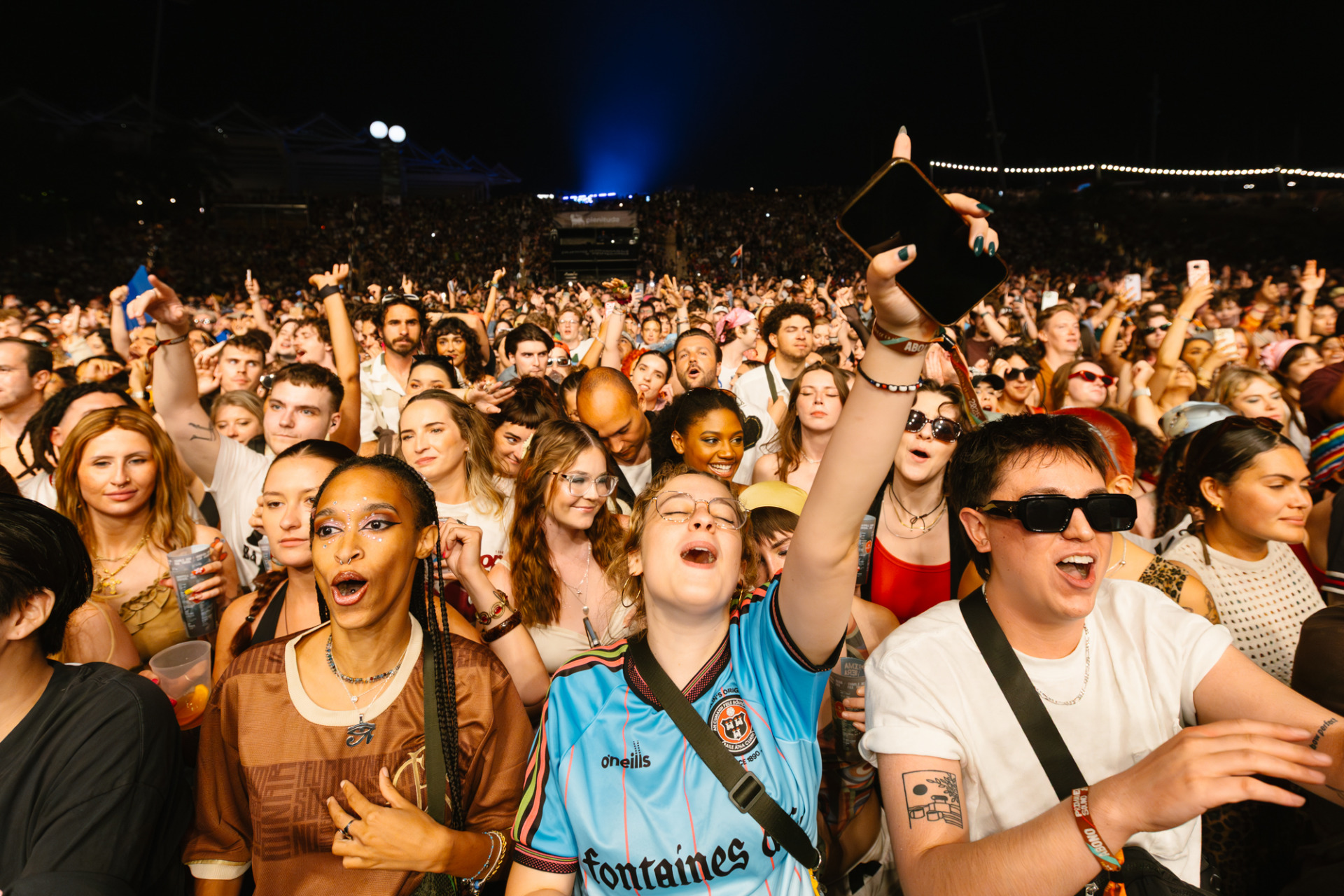
For our annual Spain Focus, Pollstar reached out to Fra Soler, head of booking at Primavera Sound, to talk about the challenges and opportunities for such a major independent festival brand, which also hosts editions in Portugal, Argentina and Brazil.
Soler also talked about the role of a festival like Primavera Sound in troubled times like these, the Primavera Sound DNA, and how the festival’s loyal audience has grown with the event over the past 25-plus years.
Pollstar: How are you feeling, both professionally and personally?
Fra Soler: Excited and very busy. The festival in Barcelona is just around the corner now, so preparations are in full swing, and we also have Porto, which is set to have a fantastic year too, and the new editions of Primavera Sound in Buenos Aires and São Paulo, scheduled for the autumn. So, there’s a lot going on right now, but we’re grateful because all this hard work is rewarded by the enthusiastic response from our community.
How are both Primavera Sound Barcelona and Porto shaping up?
The outlook for the 2026 edition in Barcelona is very good. We are very grateful to have completely sold out several months in advance for the second year running. That adds an extra sense of responsibility to live up to the faith placed in us by our audience, but it also reaffirms that we are working in the right direction. The festival layout at the Parc del Fòrum has been established over the last three years and we have found a successful format, although of course things are tweaked every year and there is still room to surprise the audience. We think as much about those who have known the festival for eight or ten years as we do about those visiting for the first time: we work to ensure that everyone wants to return in 2027.
As for Porto, the feeling is very similar: last year the festival had an excellent edition with over 110,000 attendees and a line-up which, although smaller than Barcelona’s, perfectly captures the essence of Primavera Sound. This year the festival is set to be even more successful than last year.
What is the biggest challenge in pulling off a festival the size of Primavera Sound in 2026?
We are an independent festival in an increasingly concentrated sector, and that sometimes leads to complications. Fortunately, our track record and the expertise gained from over 25 years of running the festival, combined with a unique and very loyal global community, give us the strength and the tools to carry on. Year after year, a high percentage of the audience returns to the festival, which is a sign that they trust us and our judgement, and that their experience at the festival is a good one.
But there are always challenges, of course: working around the artists’ tour schedules; bringing together venues as diverse as a seated auditorium, an electronic music club, or three main stages on the same site; coordinating a circuit of seven venues for the Primavera a la Ciutat concerts; ensuring that the festival can be followed worldwide via streaming; ensuring that Barcelona, the city where the festival was born, remains proud to host a cultural project of this scale. All of these are challenges.
What are the biggest opportunities?
Having the support of our audience is always an open door to opportunities. It invites us to experiment, to take risks, to try things that other festivals wouldn’t consider. Although we are very happy and satisfied with the festival’s current size and format, we are always looking for new ways to improve and surprise. We have spent a quarter of a century growing as a festival alongside our audience, so naturally we have ended up sharing a vision, experiences and aspirations, and that makes everything easier.
In that regard, expanding our audience base is a great opportunity, whether through the festivals in Buenos Aires and São Paulo or the hundreds of concerts we programme in Spain and Portugal throughout the year, as well as cultural projects such as Radio Primavera Sound, the Primavera Labels record label, or the Fundació Primavera Sound, through which we participate in charitable and social projects to give back to the community.
Some festivals are doing better than ever despite the economic challenges. People seem to seek out magical live experiences even more in hectic and uncertain times like the current ones. What’s your opinion on all of this?
We are fully aware of the socio-political climate in which the festival will take place. We do not want to be an isolated bubble or a parallel reality, although we are proud to be a space where the audience feels safe, where the values of diversity and inclusion take precedence, and where no form of aggression is tolerated. Undoubtedly, 300 concerts over the course of a whole week make Primavera Sound Barcelona one of the great musical celebrations of the year, although 2026 presents a context in which there are apparently few reasons to celebrate. Against this global backdrop of tension and confusion, we feel that organising an event bringing together artists from 37 different countries and an audience from 145 different places is to open a window onto inspiration, connection and community. Year after year, we see how concerts are a moment of spontaneous unity between strangers, and that is of incalculable value, especially at times like these.
In your own words: what makes up the soul of Primavera Sound?
Without a doubt, it’s the natural way in which we’ve managed to ensure that, at Primavera Sound, a rapper, a metal band and an experimental electronic producer can all be performing at the same time. At one end of the festival, one of the biggest pop stars might be performing, whilst at the other, a noise band might be playing, and every artist has their place at that specific time and place. It’s a broad, cross-cutting perspective that defines us around the world. As it’s now part of our DNA, the audience approaches every act with respect and curiosity, however different they may be. They know that everything happening on the festival stages has value and is worth discovering.
And speaking of the Portuguese edition for a moment: what is the main difference between Primavera Sound Porto and Barcelona, if any? How similar or different are Spanish and Portuguese cultures?
The Porto and Barcelona festivals share the same vision and a complete harmony that we have built and reinforced over the course of twelve years. They are two cities that are very closely connected culturally, with similar sensibilities and a similar way of experiencing music. It’s true that the Porto festival began as a little brother in 2012, but it has already managed to develop a very unique personality of its own: more intimate, cosier, and with a very special bond with its environment and its audience. It isn’t a replica of Barcelona, but another expression of what Primavera Sound means.
We’re also specifically looking at Spain as a gateway to and from Latin America, as well as Portugal for Brazil. Can you give examples from your festival line-ups that reflect this cultural exchange? Is Latin America an important source of talent for your events?
Spain and Portugal have always acted as natural bridges between Latin America and Europe, and this has also been organically reflected in our festival, as well as in Primavera Pro, which has historically connected the industries on both sides. Furthermore, in recent years this connection has been strengthened by the festival’s Latin American festivals, which are already gearing up for their third editions in Buenos Aires and São Paulo in November and December this year. We are confident that we can achieve something valuable and special there. With our experience and prestige, we can help build itineraries and musical routes in this part of the world.
Primavera Sound’s identity is very distinct and is defined by Barcelona and its creative and open-minded Mediterranean character, but we are always attentive to everything happening in other major cultural hubs around the world. We wouldn’t hold a festival in Buenos Aires and São Paulo if we didn’t connect with both cities in every way. These two festivals are also a learning experience for us: they allow us to discover first-hand sounds that broaden the definition of Primavera Sound.
FREE
 Daily Pulse
Subscribe
Daily Pulse
Subscribe
 Daily Pulse
Subscribe
Daily Pulse
Subscribe