
Business Model Flipped On Its Head: Findings From Berlin Club Study
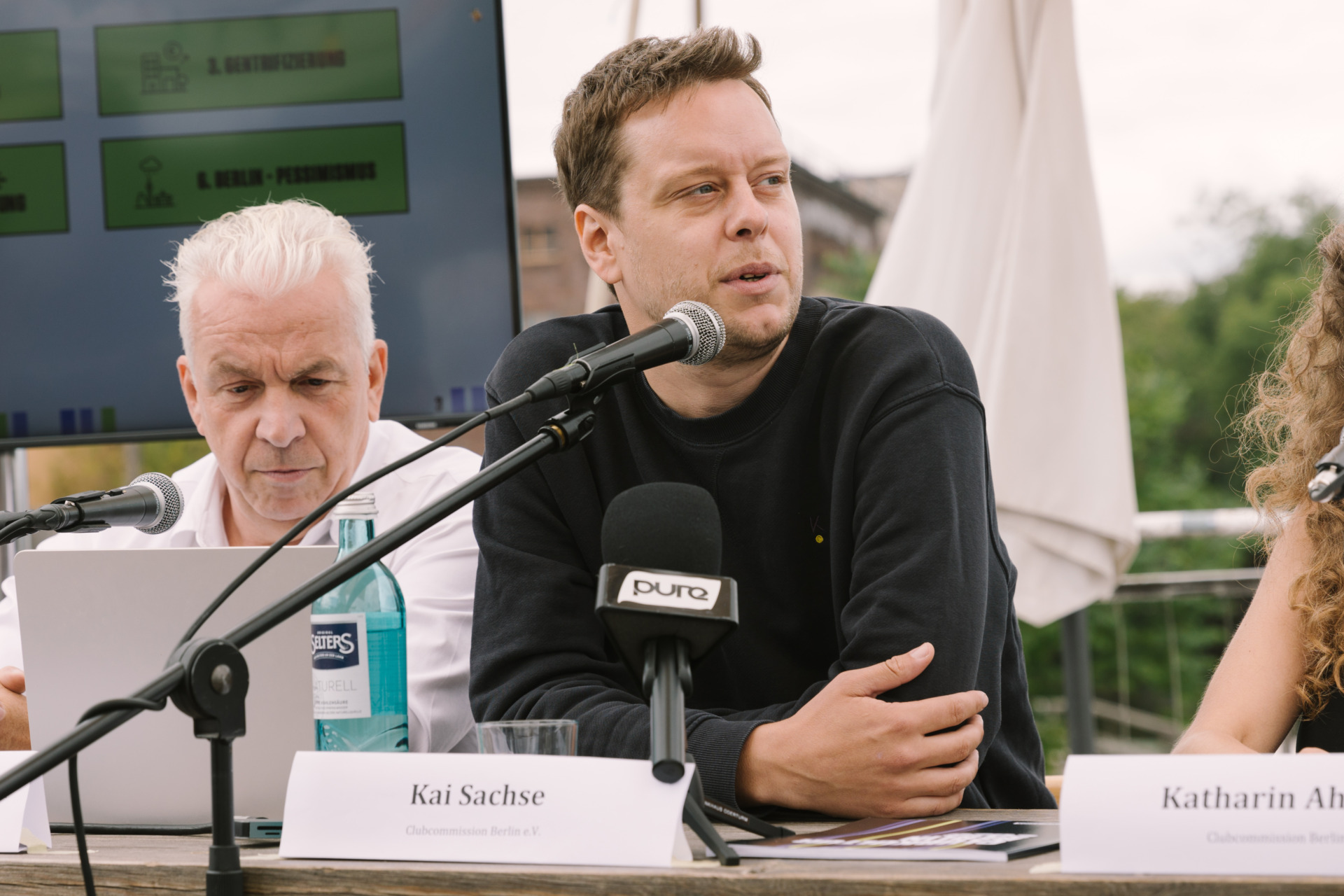
Few cities in the world are as synonymous with club culture as Berlin, Germany. On Friday, Aug. 7, the Clubcommission Berlin alongside the city’s department for economics, energy, and public enterprises, presented the latest findings from a survey among more than 100 clubs.
Some of the main conclusions from the study dubbed “Clubkultur Berlin 2026”: audience demand continues unabated, but the clubs are operating on a business model that increasingly relies on the box office, as bar sales are in decline.
Compared the 2017, when clubs reported that 60% of revenues were generated through food and beverage, and only 21% through ticket sales, that ratio has flipped. Today, 59% of revenues are generated at the box office, making it the most important income stream.
Operators reported that the audience plans a night out more consciously, leaves earlier, and consumes less alcohol.
Costs are rising: 64% of respondents cited staff as the most significant cost, followed by overheads (62%). At the same time, the audience has less money to spare, 60% of respondents said. 85% said that the economic pressures have changed the way they program their venues.
62% expanded their musical lineup; 67% raised drinks prices; 47% have adjusted ticket prices.
Collaboration is becoming the norm, with 55% of respondents saying they’ve partnered with other clubs and venues.
According to the Clubcommission, at least 24 club and cultural venues have closed since 2020, while around 25 new ones have opened.
83% of clubs reported an occupancy of at least 50%, which is hardly enough to pay the bills. In 2017, 79% of club operators said they were able to cover their operational costs, in 2025 that number sank to 61%.
95% believe that without structural improvements, the long-term survival of many clubs is at risk. “Berlin’s club culture is not dying; it is under pressure to transform,” a summery of the study’s findings reads.
Further findings worth mentioning: only 8% of respondents said they owned their venues, 31% operate on short-term rental contracts; 71% of businesses are located in districts like Friedrichshain-Kreuzberg, Mitte or Neukölln, where space for real estate is highly sought after.
23% of club owners said they thought about giving up their business within the next 12 months.
Club owners were also asked what would help them the most going forward. Answers include: making spaces available by systematically opening state-owned properties to club culture (86%); reliable funding in the form of a long-term funding structure instead of project-based individual measures, including a potential ticket levy as seen in the UK; legal recognition by recognizing clubs as cultural venues at the state and federal levels, with implications for building codes, noise protection, and funding; and improving working conditions, like expanding counseling on social security, and developing minimum standards for fair compensation.
About the study’s methodology:
The study was conducted by Clubcommission Berlin on behalf of the Senate Department for Economics, Energy, and Public Enterprises. The quantitative portion was carried out by the Berlin-based research and consulting institute Goldmedia, while Dr. Martin Fuller (Tresor Academy) was responsible for the qualitative portion. In March and April 2026, the survey targeted Berlin clubs and event organizers with a regular program, regardless of whether they had their own venue.
163 participants began the survey, and 102 completed the questionnaire in full. That is 44% more completed questionnaires than in the last survey conducted in 2019. The 2026 survey was supported by twelve qualitative interviews with clubgoers between the ages of 22 and 28, as well as an expert workshop featuring representatives from club culture, administration, politics, and urban development.
FREE
 Daily Pulse
Subscribe
Daily Pulse
Subscribe
 Daily Pulse
Subscribe
Daily Pulse
Subscribe