
Why Concert Ticket Prices Won’t Drop If Live Nation and Ticketmaster Are Split Up

A major disconnect in the penalty phase of the Live Nation antitrust trial verdict—in which a federal jury on April 15 found the promoter guiilty of operating as a monopoly—is the notion that breaking up Live Nation and Ticketmaster will somehow lower ticket prices. The cosst of tickets is a hot-button issue, one that enrages music fans, many of whom now erroneously pin their hopes on this trial solving. The likely outcome, however, is that this verdict and the impending penalties will have little to absolutely no impact on ticket prices.
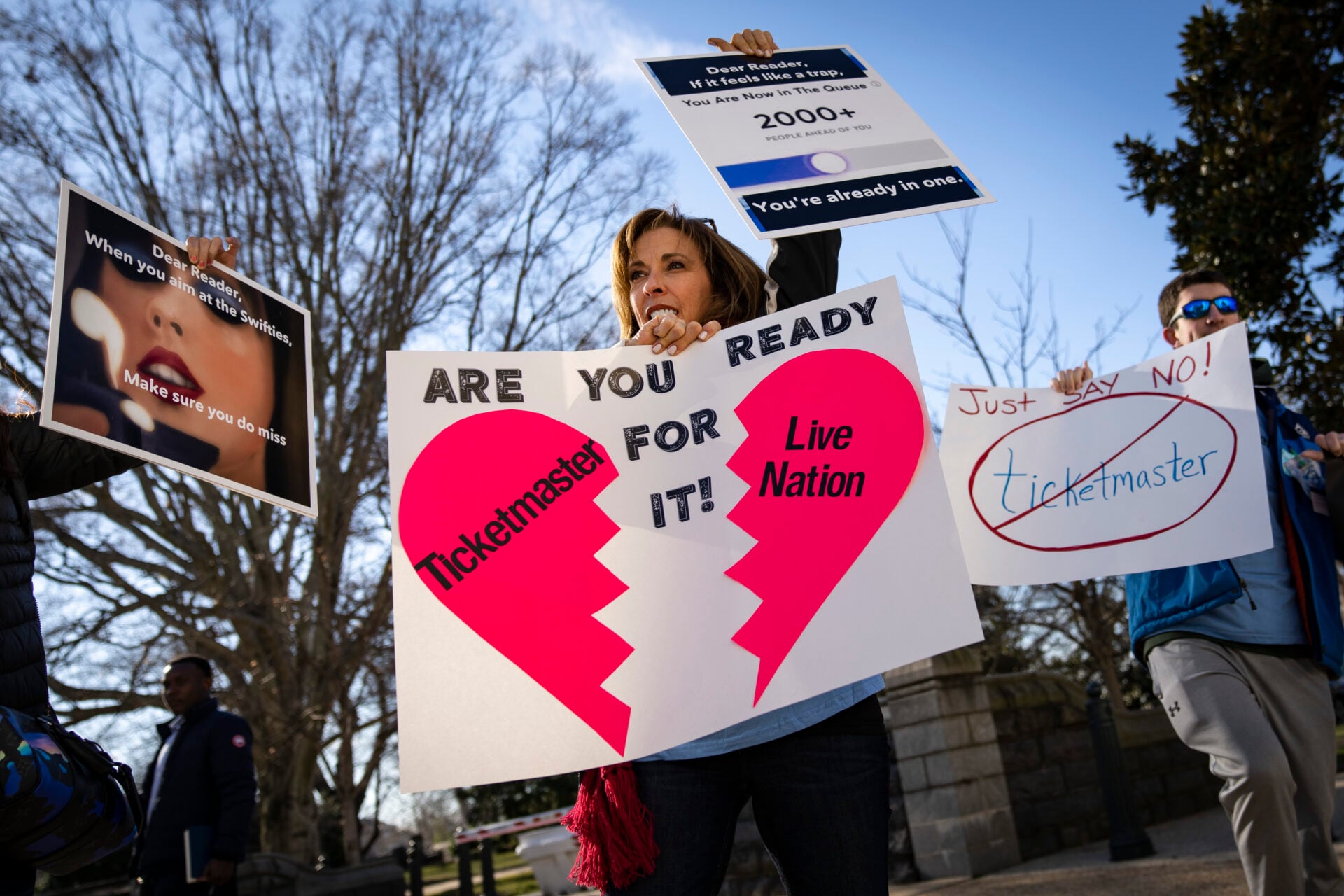
Blame Taylor Swift. Her aptly titled “The Eras Tour” was a trailblazing run for the ages on multiple levels: it set the all-time revenue record, grossing a massive $2.1 billion; pushed production, technology, and stagecraft to unprecedented levels; was proof of concept that pop artists could fill stadiums worldwide; and, its disastrous on-sale in Nov. 2022, became a cautionary tale that set in motion the Live Nation antitrust suit.
Try taking 14 million users—along with a massive wave of bot traffic that contributed to roughly 3.5 billion total system requests—and funneling them toward 1.5 million Verified Fan tickets and see how that goes. The on-sale never stood a chance. The surge caused site crashes, inordinate wait times, shortages and, ultimately, the cancellation of the public sale. In its wake came consumer outrage and blame directed at the ticketer and Live Nation (even though the tour was promoted by AEG Presents), and, inevitably, political grandstanding.
It soon led to a Capitol Hill horse-and-pony show in January 2023 with the Senate Judiciary Committee’s hearing, “That’s the Ticket: Promoting Competition and Protecting Consumers in Live Entertainment.” The political ill-will against Live Nation started before the hearing began. Five of the six witnesses were aligned against the promoter, and a majority of the committee effectively raised their hands in support of the secondary market. Keep in mind that one of those testifying at the hearing was the co-founder and CEO of SeatGeek, whose platform that very day offered tickets to Swift’s show at MetLife Stadium for $16,649.
The intractable problem with ticketing any major on-sale—whether for Swift, Bruno Mars, Bad Bunny or BTS—is limited supply colliding with unlimited demand. No matter the ticketer, not every fan gets a ticket. That awful feeling of missing out on your favorite artist is only exacerbated by an unscrupulous secondary market that uses technological workarounds to buy and resell tickets at exorbitant prices. No ticketer anywhere could have pleased all the Swifties.
Though The Eras Tour was promoted by AEG, it primarily used Ticketmaster rather than AEG’s own ticketing arm, AXS. Ticketmaster is widely regarded within the industry as having the most sophisticated ticketing platform and technology, allowing promoters, managers, and agents to monitor ticket sales in real time. SeatGeek handled primary ticketing for Swift’s shows at State Farm Stadium and AT&T Stadium and faced similar problems, though it had far less inventory.
How Live Nation Antitrust Penalties Could Disrupt The Live Business Ecosystem
Another reality of ticketing is that the ticketer often takes the public heat for pricing, despite the cost emanating with the artist and their team. No ticketer hoping for repeat business can openly deflect pricing responsibility onto an artist, so they absorb the outrage despite limited impact.
Truth be told, few consumers enjoy buying tickets in any industry. Consider airlines, where prices can rise while you comparison-shop; where dubious intermediaries offer impossibly cheap fares that may or may not exist; where mandatory insurance prompts a guilt-inducing box check before purchase; where exchange and refund policies vary wildly by fare class; where seats often are not assigned until the gate for cheaper fares, risking forced family separation; and where passengers are upsold into seats many adults physically cannot fit into.
Buying concert tickets for the biggest shows is similarly onerous. Presales can consume most of the inventory; on-sales require precision timing and high-speed internet; passwords and verification consume precious and stressful seconds; and fees—which are not solely determined by the ticketer, though now more visible—can kill the deal. Recently, trying to get tickets to Paul McCartney’s underplay at The Fonda Theatre, there was no way to pre-register despite five earnest attempts that led nowhere.
And then there is the secondary market, which for fans shut out of primary sales feels like salt in the wound. None of the profits from scalped tickets go to the artist or the promoters who put up the cash to finance tours—and who take the risk on whether a tour will end up profitable or not. The secondary, by contrast has no investment or “skin in the game.” And over time, it’s the secondary that exerts upward pressure on primary pricing.
To its credit, Live Nation Entertainment, since merging with Ticketmaster, has helped grow this business like no other company in the industry. It’s helped thousands of artists generate billions of dollars, enabled countless businesses to thrive and delivered peak life experiences to millions upon millions of fans. The industry saw steady growth throughout the 2010s, then went into overdrive during the last five years following the pandemic in what Pollstar termed “The Great Return.”
Looking at Pollstar’s Top Artists of the 2010s, it is striking how modest those numbers now seem. The top three artists from 2010–2019 were U2 at $1.03 billion, The Rolling Stones at $929 million, and Ed Sheeran at $922 million. At the time, those figures seemed astronomical.
What a difference a cursed two-year scourge makes. In March of 2020, the live industry vanished overnight into a deafening and frightening silence. Yet, that absence for roughly the next two years made live-music-loving hearts grow fonder, creating an unprecedented thirst for live. Then, from 2022 through 2024, “The Great Return” saw a ferocious appetitite for live events while produceing a new generation of stadium acts whose grosses made what U2 earned over a decade look almost quaint.
While Swift’s “Eras Tour ” led the charge grossing an aforementioned $2.1 billion, there were many other blockbuster tours: Coldplay’s “Music of the Spheres World Tour” has surpassed $1.5 billion and counting; Beyoncé’s “Renaissance Tour” and “Cowboy Carter Tours “together grossed $987 million; Bad Bunny’s post-pandemic runs—led by “World’s Hottest Tour”—brought in more than $920 million; and Ed Sheeran’s “Mathematics Tour” generated $865 million.
Skyrocketing demand also pushed average primary-market ticket prices up 41.3% between 2019 and 2024, from $96.17 to $135.92 (before dipping slightly in 2025 to $132.62). That is on the primary market alone.
The societal value placed on live experiences may now be higher than ever, fueled in part by the global spread of social media and streaming platforms, with demand showing little sign of softening for the biggest artists. Fans have continued to meet the demand despite the sticker shock and are willing to pay even more on the secondary. With this kind of demand in live, along with the cost of these mega global tours growing, with the number of trucks, crew, continents, gear, freight and hi-tech production, there’s little room for prices to decrease.
One especially unfortunate trend over the last decade are the struggles smaller independent venues face. Part of that is economic: small clubs are dealing with lower alcohol consumption, softer ticket sales and inflationary pressure. Part may also be changing consumer behavior, with fans willing to spend heavily battling for arena and stadium tickets while overlooking the fact that every night in bars, clubs, and theaters across the world, incredible artists are performing for a fraction of the price. Perhaps that trend begins to change fueled in part by those $135 average ticket prices for the top tours.
Ultimately, though, what may bring ticket prices down is not litigation, but economics—for reasons no one wants: an affordability crisis driven by inflation, high gas prices, shaky consumer confidence and unemployment. Those forces may exert downward pressure on ticket prices and accomplish what fans, the Department of Justice, and the states could never achieve in court.
FREE
 Daily Pulse
Subscribe
Daily Pulse
Subscribe
 Daily Pulse
Subscribe
Daily Pulse
Subscribe