
Down Under On The Upswing: Australia & New Zealand Plug Louder Into The Billion Dollar Sound (AUS/NZ Special 2026 Hub)
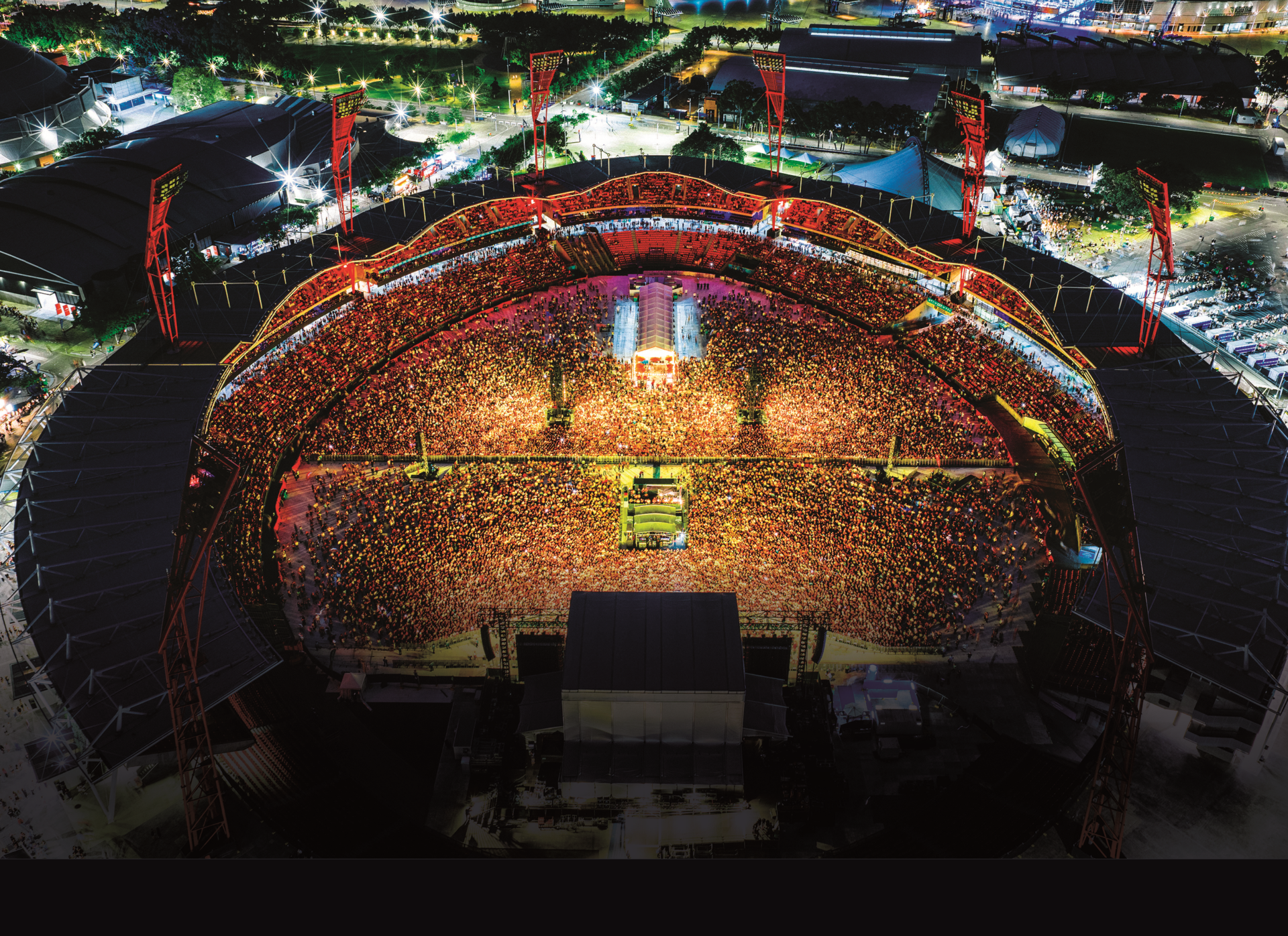
took place Oct. 18, a sold-out affair topped by Mariah Carey and Pitbull. Courtesy Mushroom Creative House
Well-documented challenges aside, Australia and Aotearoa New Zealand’s live sectors continue to be an economic boost at the top end.
Figures released this year by Creative Australia and Music Australia in The Bassline report showed the sector generated AU$4.83 billion (US$3.41 billion) in 2024-25, and contributed AU$1.44 billion ($1.01 billion) to the Australian economy.
It moved AU$2.25 billion ($1.59 billion) in tickets, with an annual rate rise of 6.9% for revenue and a 4.6% hike in crowd size. Contemporary music events and festivals attracted 12 million.
In this issue’s Pollstar ANZ Charts, the top 6 promoters alone sold 8,382,834 tickets, with a U.S. gross of $922,206,327 (AU$1.41 billion).
“Demand from consumers is at an all-time high,” says Matt Gudinski, CEO of the Mushroom Group. “I couldn’t be happier with where the business is and how strong the live entertainment business is in Australia. Coming off the back of the COVID era and seeing the strength of the Australian market is something very few could have predicted.”
Mushroom Group’s Frontier Touring topped the Promoter’s list, with MG Live at No. 4, and Chugg Entertainment at No. 12. Its Ed Sheeran “Loop” tour topped the tours category with 754,050 tickets and a $98.6 million gross.
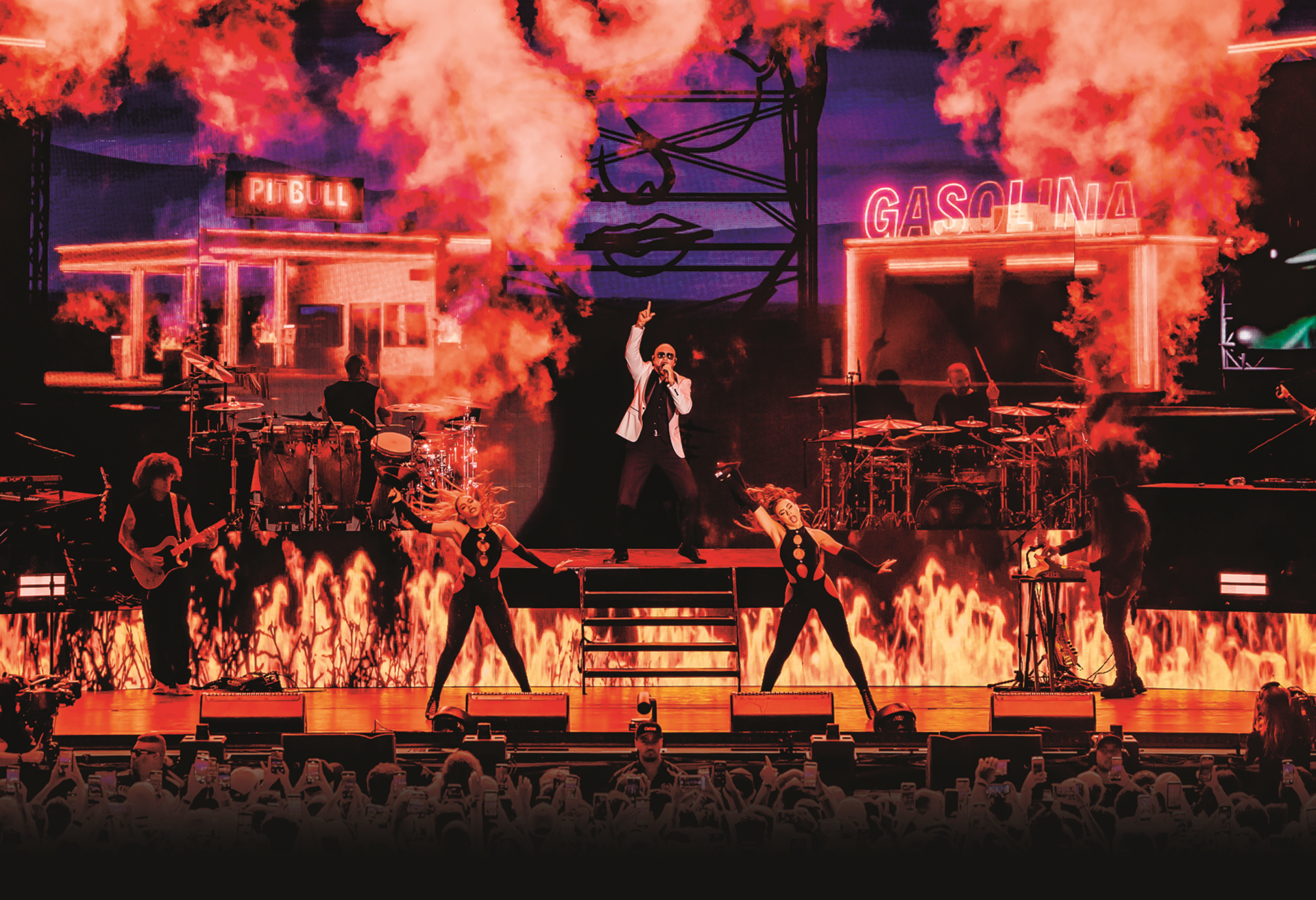
Other highlights for the group, Gudinski says, were 171,152 for Tyler, The Creator, 160,000 for Fridayz Live for four national shows headed by Mariah Carey and Pitbull, and 100,000 for the 40th anniversary run of Jimmy Barnes’ Working Class Man.
For Alex Klos, president of Live Nation Australia & New Zealand, it was exciting that audiences looked past traditional international stadium and arena acts to embrace “a much broader mix of genres, cultures and live experiences.”
“There is growing appetite for country, hip-hop, electronic music, global pop and culturally specific programming, reflected in the success of artists such as Bad Bunny, RÜFÜS DU SOL, BTS, Jelly Roll and Noah Kahan,” Klos says. “Bad Bunny’s record-breaking attendance at ENGIE Stadium (90,000 over two shows) was a particularly powerful example of how global music audiences are reshaping the live landscape across Australia and New Zealand.”
Klos adds Live Nation had three highlights over the past 12 months, one being major tours with Oasis, Metallica, Kendrick Lamar, Lady Gaga, Green Day, Drake, Dua Lipa and Chris Stapleton.
The second was the diversification of its festivals, which saw Electric Avenue in Christchurch break attendance records with 90,000 over two days, he says, along with varied genres represented at events including Spilt Milk, Harvest Rock, Rhythm & Vines, Strummingbird, SummerSalt and Sunburnt Country.
The third is Live Nation’s understanding of fans and improving their experience using data from the company’s Love Song 2026 and global Living for Live studies.
“That insight is helping us shape everything from programming and partnerships to the overall experience fans have before, during and after a show,” Klos says.
TEG Group ranked at No. 2, with Handsome Tours and Laneway Festival in the Top 10.
The diversity of fan appeal was evident TEG Live’s included seven Royal Edinburgh Military Tattoo shows drawing 220,000; 68 arena dates in six cities to 350,000 by Cirque du Soleil’s Corteo production; and the first Australian stadium tour by an Indian artist, with Diljit Dosanjh attracting over 100,000.
A 10-stop arena run by Australian hip-hop trio Hilltop Hoods exceeded 115,000. TEG Live co-promoted the first Australian stadium show by an electronic artist, with Dom Dolla selling out Sydney’s Allianz Stadium to 40,000 fans.
The Pollstar chart has TEG Van Egmond’s AC/DC PWRUP run to 452,979 fans and a gross of $50.3 million, making it the third-ranked tour.
TEG Dainty’s A-list run includes Katy Perry, Ricky Martin and Oprah Winfrey, and comedy and speaker tours as Graham Norton, Celeste Barber and Bob Geldof.
Handsome Tours’ schedule of emerging cutting-edge acts – which grossed $45.2 million off 423,306 tickets, according to Pollstar – included sellouts by Olivia Dean, Turnstile and Geese.
Laneway headlined by Chappell Roan reached an attendance high of 200,151 and a turnover of over $33.2 million, reports Pollstar Boxoffice. “It is now clearly the most important contemporary music festival in Asia Pacific,” states TEG Global Head of Touring Tim McGregor.
For Untitled Group co-founder Mike Christidis, the continued growth of its festivals and diversity of tours was the highlight.
In 2025-26, the flagship four-day Beyond The Valley sold out (40,000 tickets) in under an hour and injected AU$18.5 million ($13 million) into the local economy. When the 2026-27 edition went to market in August, all tickets vanished at presales.
Untitled’s biggest successes were RÜFÜS DU SOL breaking venue attendance records with 184,301 and DJ superstar Dom Dolla, “who played to a phenomenal 35,000-person sellout at Sydney’s Allianz Stadium, quickly doubling down by selling out a massive 60,000-capacity show at Melbourne’s Marvel Stadium.”
The emergence of 18- to 24-year-olds at events saw a renaissance for Good Charlotte, Christidis expects a similar tournout for Black Eyed Peas.
Destroy All Lines’ general manager Chris O’Brien noticed the same phenomenon with The Offspring, and Good Things festival, which had a draw of 90,000 across three cities. James Blunt’s 50,000 sales was also a high point.
“Consumer interest remains strong, but it’s a challenging market,” O’Brien says. “Festivals are facing it tough because artist productions have gone up as well, along with guarantees, and overseas acts can be hard to confirm sometimes.”
AOTEAROA NEW ZEALAND
Aotearoa New Zealand continued to be drawn to international acts. Robbie Williams sold out all 28,000 tickets at One NZ Stadium, Linkin Park set a new attendance record of 12,736 at Spark Arena, three Ed Sheeran stadium dates moved 134,327, and RÜFÜS DU SOL drew 25,000 to Western Springs Stadium.
Eden Park CEO Nick Saunter commented, “Audiences are increasingly looking for more than an event to attend – they want distinctive, memorable experiences that give them a reason to travel, bring people together and become part of a wider cultural moment.”
Blockbuster events have been varied, including Metallica, sports team Tottenham Hotspur and the Royal Edinburgh Military Tattoo.
“New Zealanders have demonstrated that when the experience is exceptional, they will embrace it.” This is obvious in the success of major festivals where sharp programming drew crowds from around the country or abroad. Of the 90,000 who came to Live Nation’s Electric Avenue over two days, 56% were from outside Christchurch. It generated NZ$13.9 million (US$8.19 million) for the city.
Laneway had its best numbers with 36,000 at Western Springs Stadium. Almost half were tourists. The venue revealed Laneway, along with the 36% of tourist crowds for RÜFÜS DU SOL, generated NZ$10 million ($5.89 million) over the summer. Ultra NZ’s debut in April brought an economic boost of NZ$5.4 million ($3.18 million). However, with the weak NZ dollar and escalating costs, dozens of music festivals closed or pressed pause, including WOMAD NZ, One Love, Juicy Fest and Splore.
FUEL’S GOLD
When the Middle East conflict this year raised fuel prices, the Australian government temporarily cut fuel excise by 60% to 20.6 cents.
But relief expired on Aug. 3, and motorists were paying 32 cents. Tours have not been canceled but some festivals shortened their runs. Freight charges tripled, and eating at on-the-road cafes went up by 5%. Acts are determined to rewrite tour budgets, saying promoting their records was essential.
“We did six shows with Counting Crows and had to fill up with NZ$5,000 ($3,533) of diesel,” Alex Laska of alt-country band Kingswood told Pollstar. “That was $1,000 ($706) a show.”
In a country like Australia where cities are so far apart – the East Coast to West is a four-hour journey – and transporting international productions becomes exorbitant.
Paul Dainty, president and CEO of TEG Dainty, says, “As it is, Australia is fast turning into just an East Coast tour run. It’s too expensive otherwise.”
Untitled’s Christidis explains, “Your audience profile shifts city to city, so working out which cities to play, how big a tour to build, and the right venue in each market is genuinely difficult.”
Eric Lassen, chief executive of Live Performance Australia, says, “Against a backdrop of much higher costs of bringing live performance to the stage, audiences are being more selective in how they spend their arts and entertainment dollar.”
Darryl Jeffrey of Sydney Showground and ENGIE Stadium, which caters for 46,500 at concerts, agrees there is a tendency to buy closer to the event unless it’s a red-hot ticket.
“Demand hasn’t weakened,” he said. “It has become more selective. That places even greater emphasis on compelling content, smart marketing and delivering an exceptional fan experience.”
In the world of grassroots venues, operational and insurance costs are up by 50% since the pandemic. In July, Queensland’s nightlife economy commission John Collins released his Moonside report in which he made 62 recommendations.
“It’s obvious smaller venues needed urgent help to survive, and we have to make sure the next generation of acts had a place to hone their craft before the 2032 games,” Collins said.
The government immediately introduced his call for licensing and fee discounts for venues that stage live acts, offered large touring acts venue rebates if they booked small acts as supports, and expanded the regional touring circuit.
Associations push for a $1 ticket levy from shows above 5,000 punters to go to grassroots venues. The Australian Music Venues Foundation estimates it could generate AU$3 million ($2.12 million) to AU$3.15 million ($2.22 million) a year from five large venues in Sydney alone.
The Corner Hotel, which ranks No. 6 in Pollstar’s club list for its 800-capacity band room, is one of the few mid-tier venues left in a city which is the home of live music.
The trick, its general manager Rod Smith told Melbourne publication The Age, is to change with the times as the neighborhood transforms while remaining consistent. “I know a lot of bands and tour managers, when they come to us, they know exactly what they’re going to get.”
Well-documented challenges aside, Australia’s and Aotearoa New Zealand’s live sectors continue to be an economic boost at the top end.
Figures released this year by Creative Australia and Music Australia in The Bassline report showed the sector generated AU$4.83 billion (US$3.41 billion) in 2024-25, and contributed AU$1.44 billion ($1.01 billion) to the Australian economy.
It moved AU$2.25 billion ($1.59 billion) in tickets, with an annual rate rise of 6.9% for revenue and a 4.6% hike in crowd size. Contemporary music events and festivals attracted 12 million.
In this issue’s Pollstar ANZ Charts, the top 6 promoters alone sold 8,382,834 tickets, with a U.S. gross of $922,206,327 (AU$1.41 billion).
“Demand from consumers is at an all-time high,” says Matt Gudinski, CEO of the Mushroom Group. “I couldn’t be happier with where the business is and how strong the live entertainment business is in Australia. Coming off the back of the COVID era and seeing the strength of the Australian market is something very few could have predicted.”
Mushroom Group’s Frontier Touring topped the Promoter’s list, with MG Live at No. 4, and Chugg Entertainment at No. 12. Its Ed Sheeran “Loop” tour topped the tours category with 754,050 tickets and a $98.6 million gross.
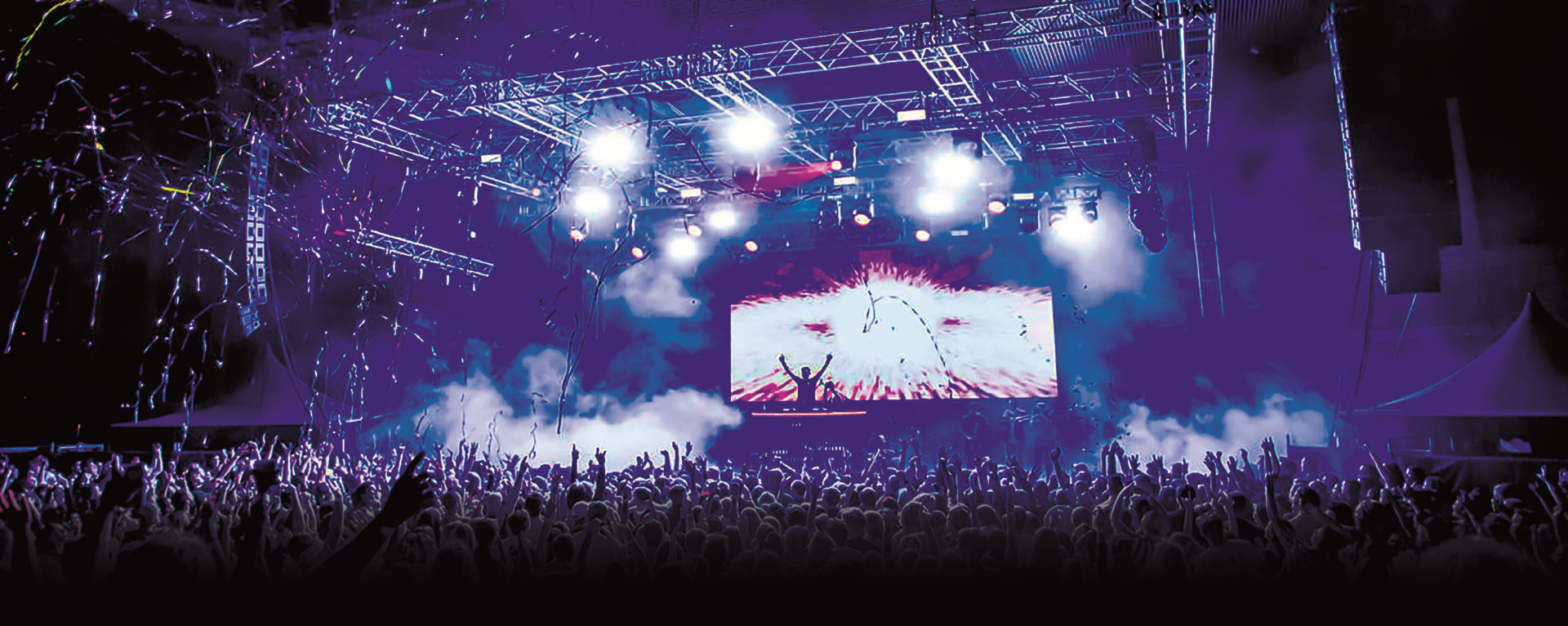
Courtesy Brisbane City Council
Other highlights for the group, Gudinski says, were 171,152 for Tyler, The Creator, 160,000 for Fridayz Live for four national shows headed by Mariah Carey and Pitbull, and 100,000 for the 40th anniversary run of Jimmy Barnes’ Working Class Man.
For Alex Klos, president of Live Nation Australia & New Zealand, it was exciting that audiences looked past traditional international stadium and arena acts to embrace “a much broader mix of genres, cultures and live experiences.”
“There is growing appetite for country, hip-hop, electronic music, global pop and culturally specific programming, reflected in the success of artists such as Bad Bunny, RÜFÜS DU SOL, BTS, Jelly Roll and Noah Kahan,” Klos says. “Bad Bunny’s record-breaking attendance at ENGIE Stadium (90,000 over two shows) was a particularly powerful example of how global music audiences are reshaping the live landscape across Australia and New Zealand.”
Klos adds Live Nation had three highlights over the past 12 months, one being major tours with Oasis, Metallica, Kendrick Lamar, Lady Gaga, Green Day, Drake, Dua Lipa and Chris Stapleton.
The second was the diversification of its festivals, which saw Electric Avenue in Christchurch break attendance records with 90,000 over two days, he says, along with varied genres represented at events including Spilt Milk, Harvest Rock, Rhythm & Vines, Strummingbird, SummerSalt and Sunburnt Country.
The third is Live Nation’s understanding of fans and improving their experience using data from the company’s Love Song 2026 and global Living for Live studies.
“That insight is helping us shape everything from programming and partnerships to the overall experience fans have before, during and after a show,” Klos says.
TEG Group ranked at No. 2, with Handsome Tours and Laneway Festival in the Top 10.
The diversity of fan appeal was evident TEG Live’s included seven Royal Edinburgh Military Tattoo shows drawing 220,000; 68 arena dates in six cities to 350,000 by Cirque du Soleil’s Corteo production; and the first Australian stadium tour by an Indian artist, with Diljit Dosanjh attracting over 100,000.
READ MORE
Stadium & Arenas Use Global Technology & Redesigns To Deepen Fan Loyalty (Australia/New Zealand Special 2026)
Auckland: Kia Ora From The City of Sails (Australia/New Zealand Special 2026)
Back To The Garden: Eden Park Opens To The World (Advertorial)
Impact International: Australia/New Zealand 2026 Honorees
2026 Impact INTL: Australia/New Zealand Honoree: Simon Anson
2026 Impact INTL: Australia/New Zealand Honoree: Jae Butler Evans
2026 Impact INTL: Australia/New Zealand Honoree: Michael Christidis
2026 Impact INTL: Australia/New Zealand Honoree: Paul Dainty
2026 Impact INTL: Australia/New Zealand Honoree: Matt Gudinski
2026 Impact INTL: Australia/New Zealand Honoree: Matthew Lazarus-Hall
2026 Impact INTL: Australia/New Zealand Honoree: Sally Mather
2026 Impact INTL: Australia/New Zealand Honoree: Brett Murrihy
2026 Impact INTL: Australia/New Zealand Honoree: Nick Sautner
2026 Impact INTL: Australia/New Zealand Honoree: Mark Vaughan
Impact: NextGen Australia/New Zealand 2026 Honorees
Impact: NextGen Australia/New Zealand 2026 Honoree: Sasha Chifura
Impact: NextGen Australia/New Zealand 2026 Honoree: Allison Jones
Impact: NextGen Australia/New Zealand 2026 Honoree: Esha Kumar
Impact: NextGen Australia/New Zealand 2026 Honoree: Josh Paterson
Impact: NextGen Australia/New Zealand 2026 Honoree: Emily Taylor
FREE
 Daily Pulse
Subscribe
Daily Pulse
Subscribe
 Daily Pulse
Subscribe
Daily Pulse
Subscribe